I may never get a job again
I lost my 9-to-5 a month ago. Instead of job hunting, I went full-time on my own product.
I’m 33. About a month ago, I lost my 9-to-5.
I may never get a job again. (Hopefully)
I would be freaked out if this happened at 27. Not now.
Here’s a thing about me: I’ve always been super risk-averse. I need things to be under control. I only apply for jobs I think I’m absolutely qualified for. I only do things when I’m sure I can 100% do them.
I’m also an immigrant. At the end of 2017, I flew to Australia from China with a working holiday visa and a few thousand dollars. Worked at a mushroom farm. Cleaned at a kindergarten. Waited tables at a buffet restaurant. The past 8 years were about one thing: building a design career and getting permanent residency in a completely new country. I got my PR last year. That chapter is closed.
Which is part of why I’m not freaked out. The other part:
For the past year, I’ve been building Podifai, a product customizer for Shopify stores, on the side. While working full-time.
The layoff was a month ago. Since then, I’ve been doing it full-time.
Key takeaways
- A single real merchant conversation can be enough to validate a direction, but validation is only the start.
- Building the product and distributing it are separate jobs; SEO, community, and marketing compound slowly.
- Consistency matters more than passion or perfection when you are building solo.
I’m finally doing this solo
I’ve told so many people I wanted to build my own thing. I never made it official. Now it is.
It’s a Shopify app.
And the reality is that it’s not glamorous. It’s way harder than I thought.
But I’m glad I’ve never thought about giving up.
Here’s what I’ve learned so far.
1. I’m not that passionate about this problem.
I used to be obsessed with building something new, something cool, as a designer. Then I realized: if I want the business to be sustainable, I have to compete with the other players in the same category.
You’ve got to know who you’re competing with really well. You’ve got to know what your odds of success are.
That’s why I picked a product customizer in the Shopify space.
One, it’s a small niche.
Two, it plays to my product design background.
Three, there are already plenty of players out there but none of them is truly dominating the market.
I’ve done a lot of research on the existing products. My biggest assumption: the existing solutions are not good enough, or too expensive. Design-wise, many of them feel the same. And the live preview setup, the part merchants actually care about, is painful in most of them. That’s the part I decided to build around.
I’m not passionate about this problem. But I’m committed to solving it really, really well. Better than the current solutions.
2. One reply was all my validation
Before building the product, I used cold emails to validate the idea. One merchant replied. The conversation didn’t go far — the merchant ghosted me multiple times — but it was enough for me to move forward.
Looking back, I probably wouldn’t do cold emails again.
But when you don’t have a network, you try whatever you can.
3. There is no shortcut in marketing
Before doing this for real, I kept seeing content like: “How SEO brought us 1,000 customers.” “Reddit is an underrated channel.” “If your paid ads break even, you can scale to real revenue.” “Affiliate marketing will grow your app for you.” All with the same undertone: you’re missing out.
So I tried whatever I believed could work. Google Ads. SEO. Free tools. AI-written articles. Everything the gurus said.
Here’s what I found: every single channel is hard in its own way. When nobody knows your product, nobody trusts your product. None of them work straight away.
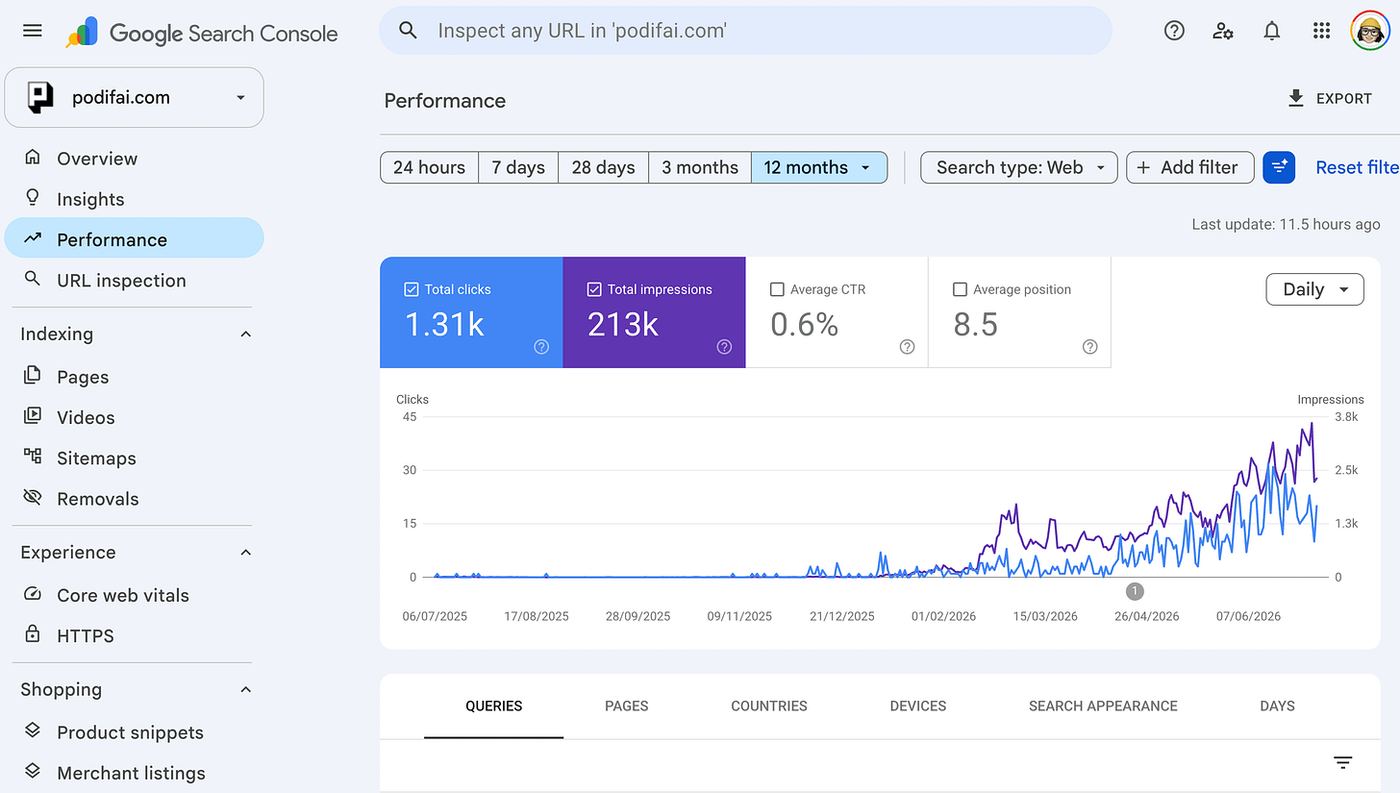
SEO is a good example. For months, almost nothing happened. The majority of our pages weren’t even indexed, and I had no idea why. Then, starting a few months ago, organic clicks began to climb. Now we hear from merchants who found us through search, or who saw Podifai mentioned by AI tools like ChatGPT, Claude, or Gemini. It just took way longer than anyone tells you.
What worked for us early on was Reddit. It brought a first wave of merchants who actually tried the app with this post.
The grass is never greener on the other side. Everyone selling you a channel is selling surface-level knowledge. You have to get into it, experiment, and keep taking action. Get a little better every day by actually doing it. That’s the whole secret. There is no shortcut.
4. My first 5 paying customers
The initial MVP was supposed to launch around Christmas last year. I decided not to launch because some key features were still missing.
If I did it again, I’d ship and get feedback way earlier. That could be another post.
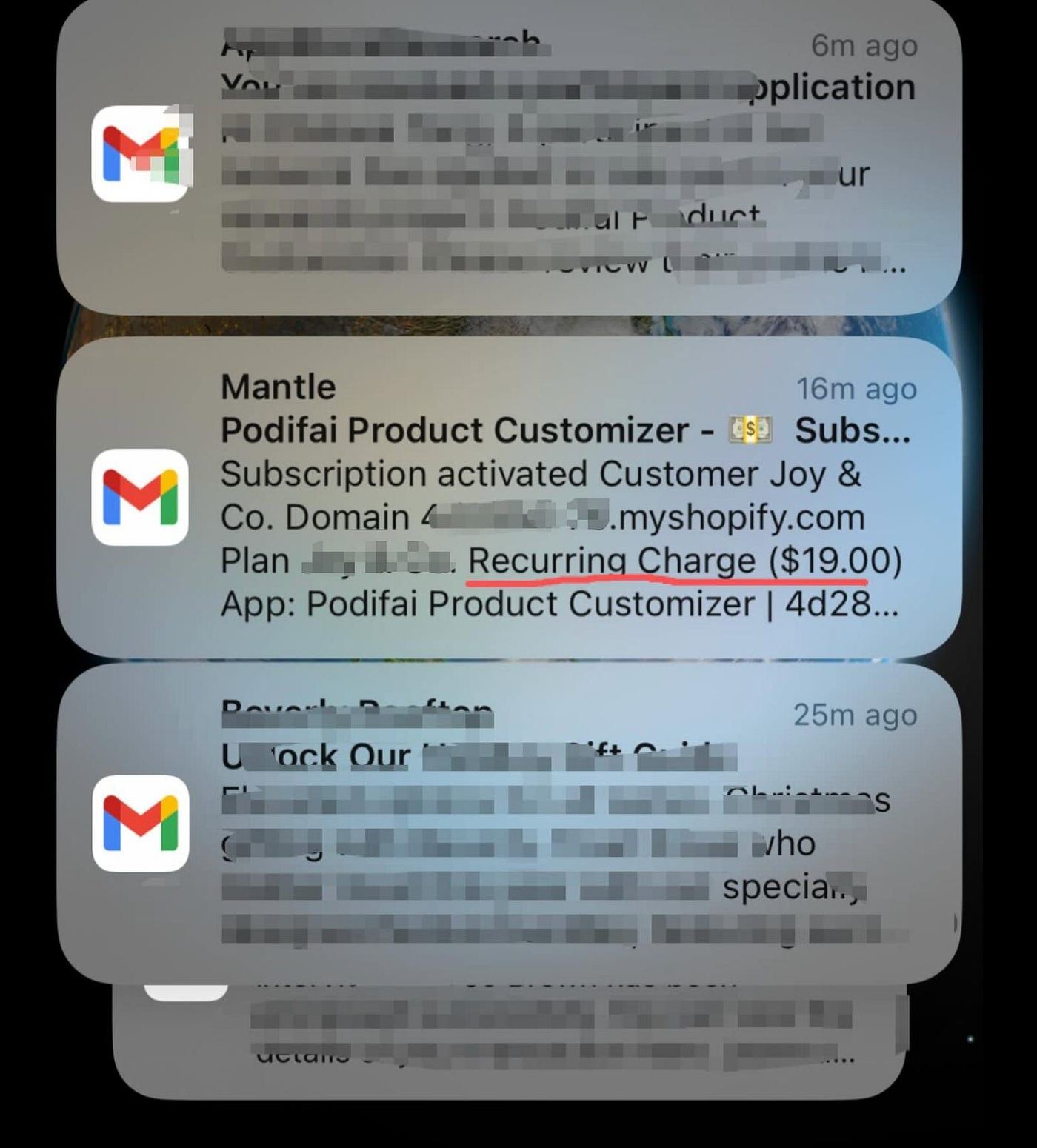
When it finally launched, I tried Google Ads and got my first 5 paying customers.
Google Ads did one thing for me: it proved somebody would actually pay for this product. That’s all it did. The math didn’t work — the cost per acquisition was way too high.
I could probably optimize the ads and bring the cost down. But for a niche product at this stage, pouring money into ads didn’t feel worth it. I stopped.
5. Then I made the app free. Maybe a mistake.
I have to say, this might not be the best idea. But I ended up going for it.
Paying customers were coming in too slow. Reviews were too slow. Feedback was too slow. So I made the app completely free.
I’ve debated this a lot, with a friend and in a few Reddit threads. One camp says free is the fastest way to get reviews and feedback early on. The other camp says free attracts the wrong customers and quietly bends your product direction. I still don’t have a definitive answer.
What I do know: the product has reached a stable point. I’m about to introduce paid plans, and the existing paid features will stay behind them.
If you’ve made the free-vs-paid call on your own product, I’d love to hear how you decided.
6. 400+ merchant stores. Zero revenue.
Having real merchants use the app is completely different from imagining it.
Every feature I build now is an investment. So I only have the dev agency build what customers actually ask for.
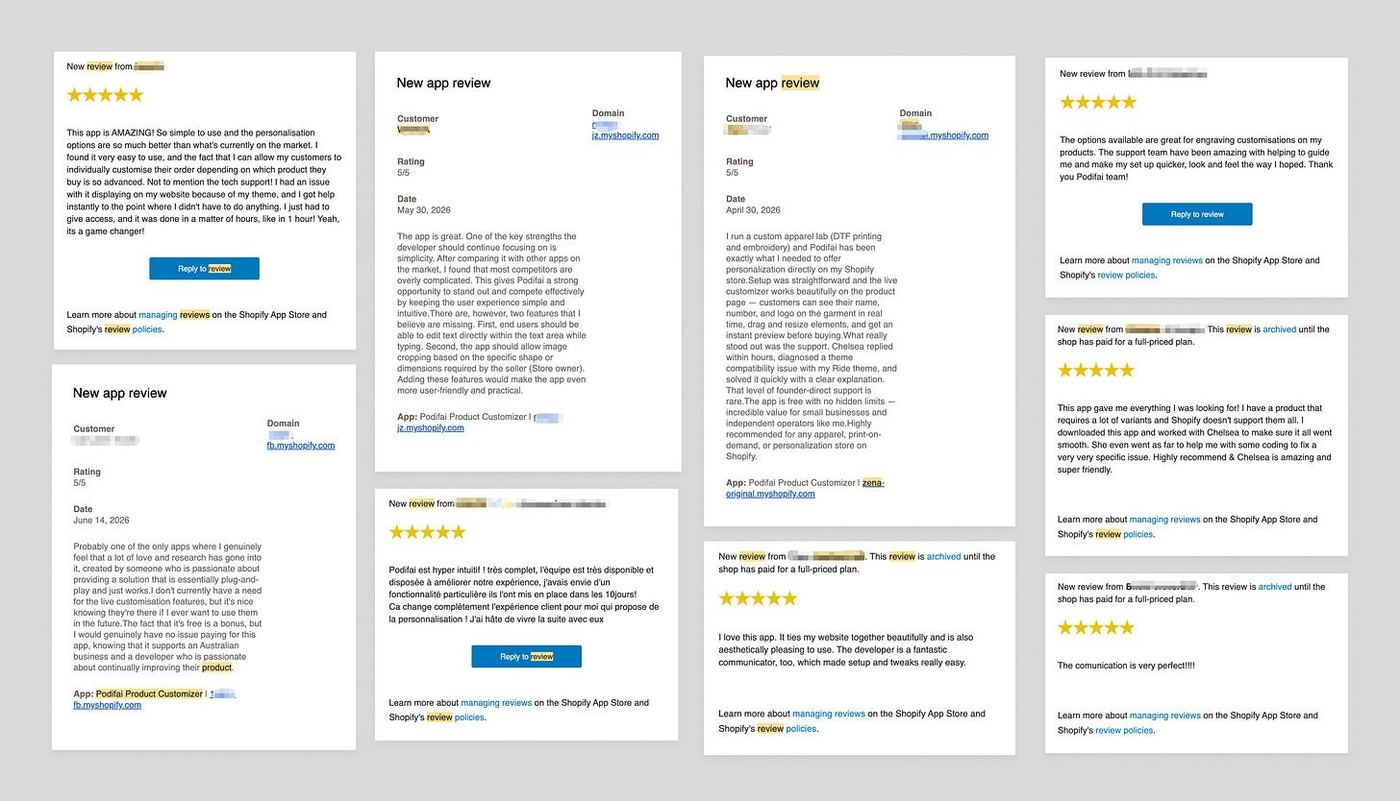
When a merchant tells me what they love about the app, I ask for a review on the spot. But the best ones show up on their own — reviews from merchants I’ve never talked to.
I handle every support ticket myself while I’m awake. And I wrote a help doc so AI can answer questions while I’m asleep.
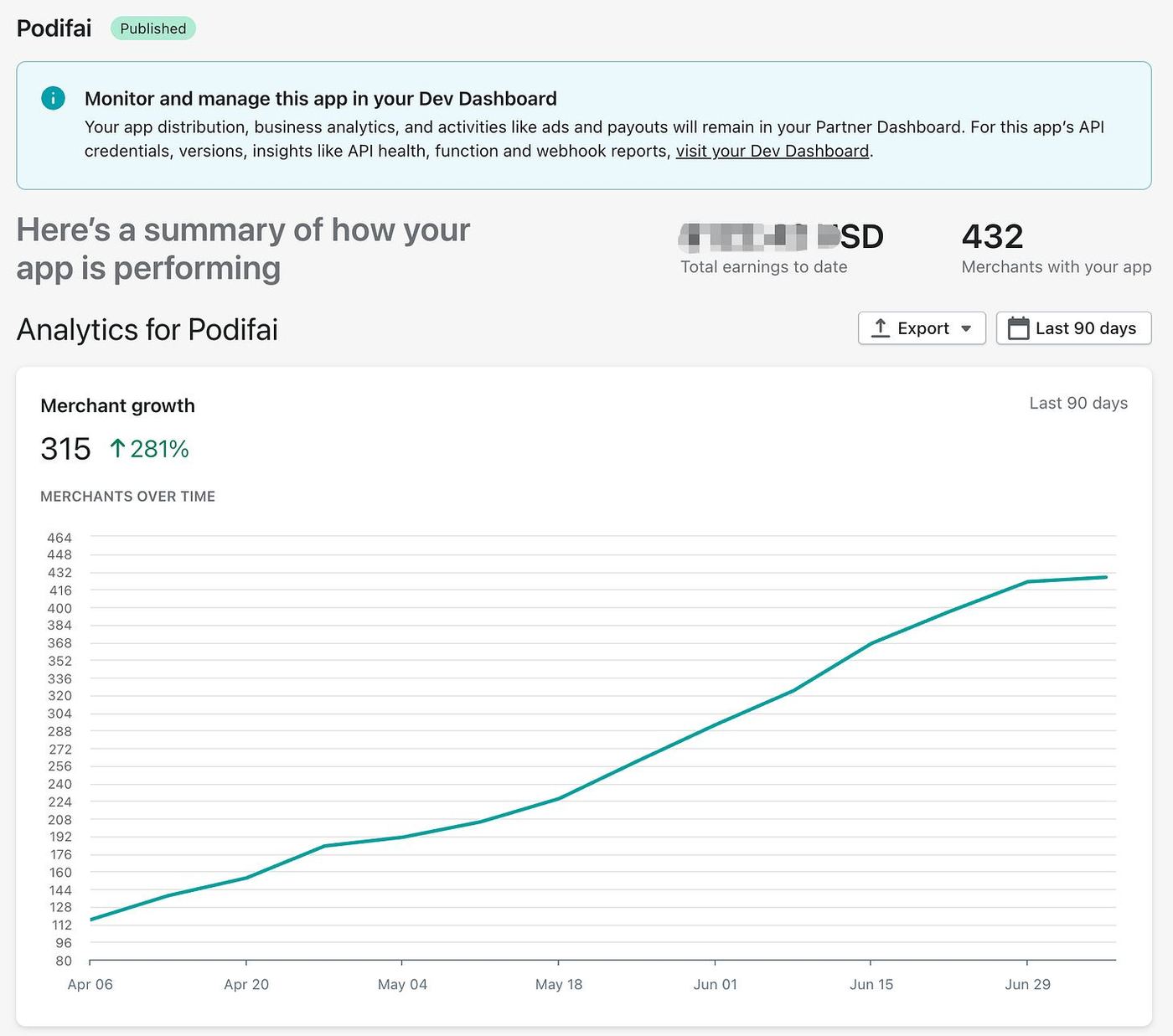
As of July 2026, more than 400 merchant stores had installed Podifai. Real feedback like this:
7. Passion runs out
Passion runs out. Good habits or momentum are what keeps you going.
As I mentioned, I used to be driven by passion. If I felt excited about something, I’d do it. When the passion ran out, I’d stop. That’s why I kept chasing new things.
That just doesn’t work for building a business.
I used to think Atomic Habits was just another productivity book — things everybody already knows. Then I realized: actually doing what the book says is really, really hard.
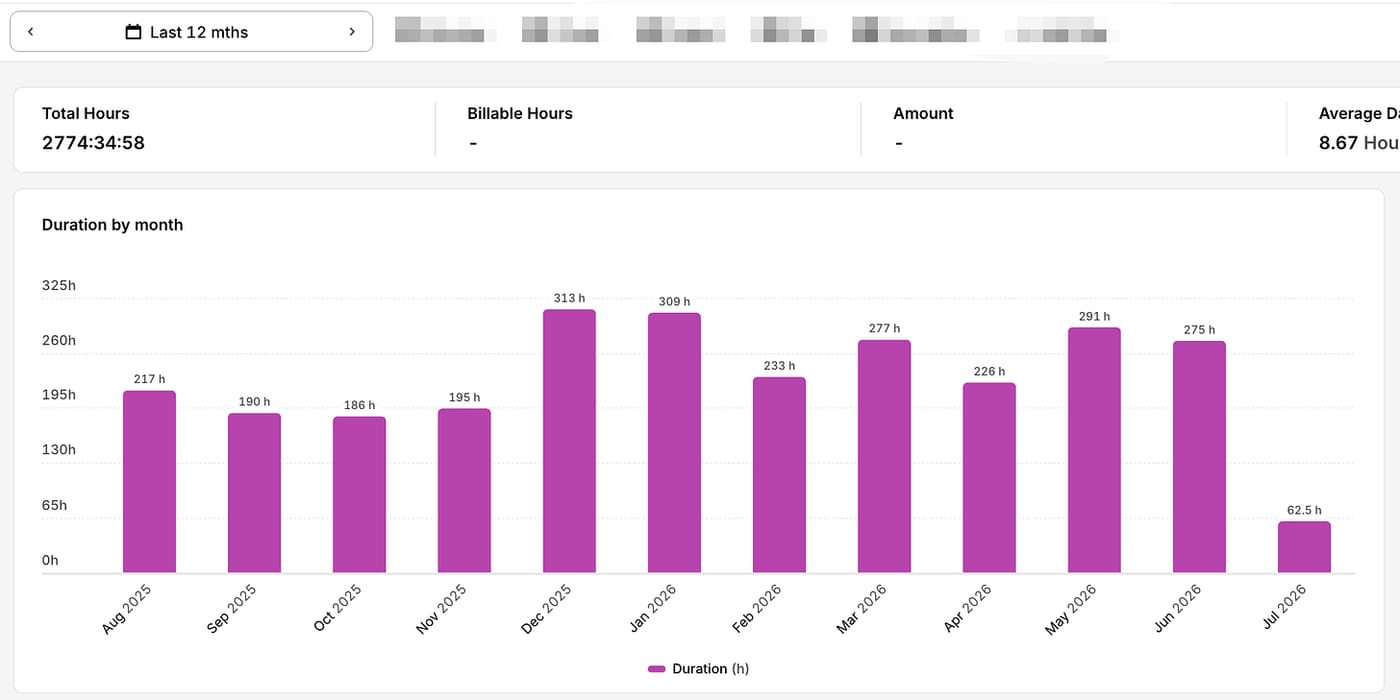
I’ve also built a habit of writing a daily work diary on X
8. Completion vs Perfection
It used to take me ages to start something hard or out of my comfort zone. The biggest thing holding me back was overthinking — I wanted it to be perfect. But it’s never going to be perfect. Just get started, then complete it. The second time you do it, you’ll start optimizing automatically. That’s human nature.
It still took me months to get out of that loop — the procrastination, the not being able to just start.
The brain wants to save energy. It picks the easy thing over anything that requires real thinking or context switching. That’s why TikTok is so popular: constantly changing, always short, exactly what the brain likes. Getting out of the loop is really about understanding how your own brain works.
9. What if it doesn’t work out? Do the thing, peacefully.
This question is still in my head sometimes.
People are using the product and liking it. But I’m still not making revenue.
What if the total market is smaller than I thought? What if the competition is much higher than I expected? Too many questions. Many of them are out of my control.
I used to be in “anxious mode” for years. Maybe it’s my personality. Maybe it’s my cultural background. I always wanted to maximize my time, try my best, be prepared. What I forgot was living in the moment instead of being anxious about the future.
I know my brain much better now, and I’m much more peaceful. I almost don’t procrastinate anymore. I act on things straight away. Even when I don’t want to do something, I get myself started anyway — a few minutes in, I start liking it. This one interview about dopamine inspired me a lot.
Many times you know what you need to do. You just need to do it. Peacefully.
Why don’t I just get another job?
Eight years ago, my goal was getting permanent residency in Australia. Now, it’s building something sustainable enough to be my job.
You may be wondering: if you just want a job, why not work for somebody else? Well, I do cherish freedom. Having the option has always mattered a lot to me.
What’s next
I’ll be sharing the pains and gains while figuring this out. You’ll be seeing me here a lot more often.
I’m looking to connect with solo founders, bootstrapped founders, and folks in the Shopify space.
Say hi.