Most Purchased Items Online in 2026: Merchant Guide
See what product categories dominate online sales in 2026, where margins are highest, and how personalization creates premium pricing. Backed by real data.
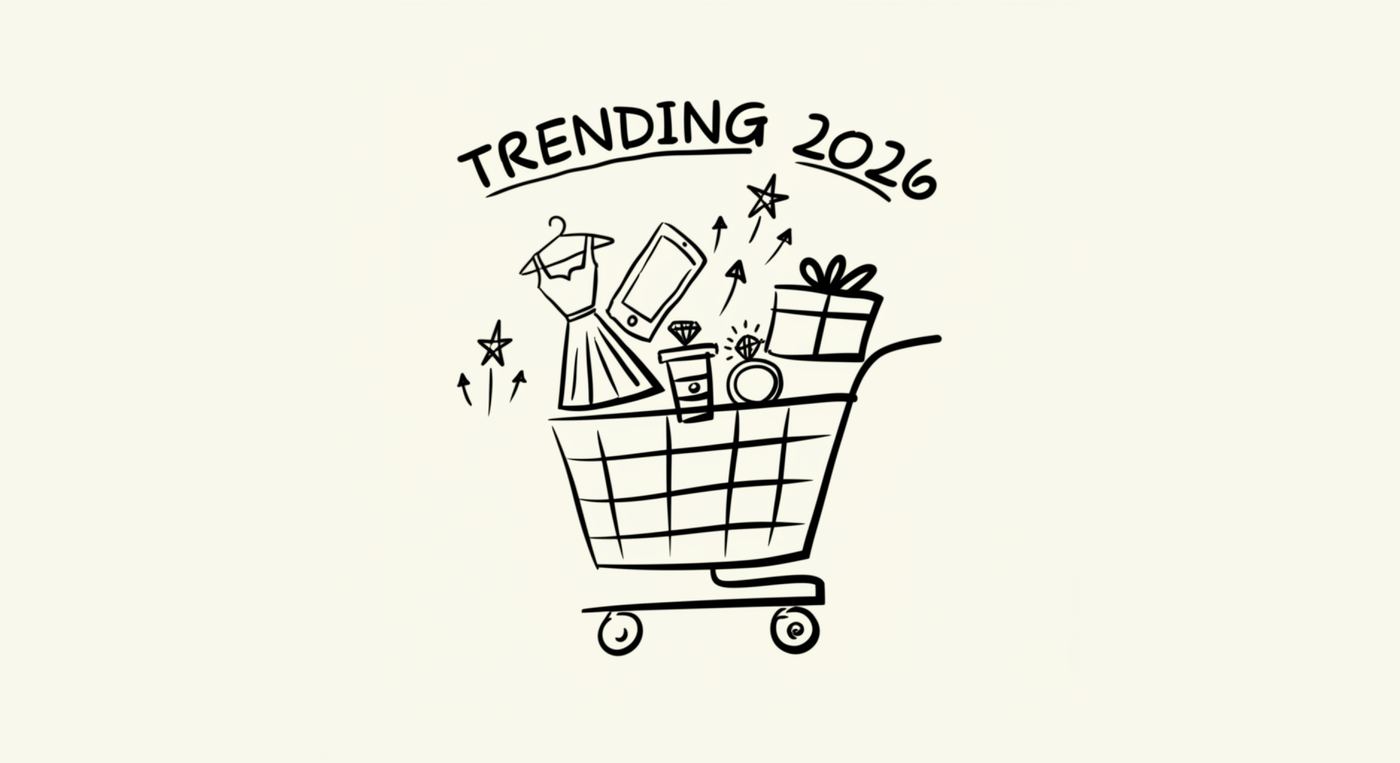
TL;DR: Health/beauty products, apparel, and consumer electronics dominate online sales in 2026. Customizable items see 30-50% higher margins and fewer returns. Phone accessories and gaming products show strongest growth, while subscription-based products drive repeat revenue.
Global ecommerce just crossed $6.88 trillion. That's 21.1% of all retail sales worldwide, up 7.2% year-over-year—and it's not slowing down. Nearly 2.8 billion people made at least one online purchase last year. (Source: eMarketer, 2024)
Every Shopify merchant eventually asks the same thing: what should I be selling? The answer moves quicker than you'd think. Products that dominated carts three years ago? Not necessarily winning today. And the merchants grabbing the biggest slices of that $6.88 trillion pie aren't just selling popular stuff—they're selling products their way. (Source: eMarketer / Statista, 2025)
Knowing what sells is only half of it. The other half is figuring out why certain products command better margins, fewer returns, and more loyal customers. We're breaking down what people are actually buying online right now, where the money is, and how customization is quietly reshaping what sells in 2026.
The product categories dominating online sales
The product categories dominating online sales in 2026 are fashion and apparel ($920.2B), home goods and decor, electronics and gaming accessories, and food and groceries. Fashion leads by revenue, but groceries are growing fastest at 25.8% year-over-year. Across every category, merchants offering product customization consistently capture higher margins and lower return rates.
| Category | Revenue (2025) | YoY Growth | Customization Potential |
|---|---|---|---|
| Fashion & Apparel | $920.2B | 12.1% | High — monograms, custom fits, engravings |
| Food & Groceries | $838.1B | 25.8% | Medium — personalized gift boxes, engraved accessories |
| Home Goods & Decor | $250B+ | 8.5% | High — custom wall art, personalized blankets |
| Electronics & Gaming | 15-18% of sales | 6.2% | Medium — custom keycaps, controller skins |
| Pet Products | $45B+ | 11.3% | High — custom collars, engraved tags, personalized beds |
Fashion, jewelry, and apparel
Clothing, shoes, and accessories consistently sit at the top of every ecommerce list—fashion ecommerce sales hit $920.2 billion in 2025, up 12.1% from the prior year. Meanwhile, 62% of US consumers say they're actively interested in personalized beauty and fashion products. That number keeps climbing. (Source: Bolt / YouGov, 2023)
But for Shopify store owners, the fashion category is brutal. You're not going to out-Amazon Amazon.
Merchant takeaway: Apparel demand is broad, so differentiation usually comes from fit, material, niche positioning, fulfillment speed, or personalization. Custom options such as monograms, image upload, and size-specific add-ons can help a Shopify store avoid competing only on generic product listings.
Home goods and decor
The pandemic permanently shifted how people think about their living spaces, and home furnishing remains a top online category. Customizable wall art, throw pillows, personalized blankets—they're all driving solid sales.
Here's the thing: these aren't impulse buys. Customers spend real time configuring exactly what they want. They visualize it in their space. By the time they click "add to cart," they've already committed emotionally—and that emotional investment translates directly to lower return rates.
If you're looking for a step-by-step guide to launching a custom product line, home decor is one of the easiest places to start. Customers already expect to pick colors, sizes, and materials.
Electronics and gaming accessories
Consumer electronics hold steady at 15-18% of online sales. The real growth, though, is in customizable add-ons. Custom keycaps for mechanical keyboards have maintained high search volume since 2022. Gaming gear with personalized elements—custom controller skins, RGB lighting configs—commands premium pricing. (Source: US Census Bureau / eMarketer, 2025)
Same pattern as everywhere else: commoditized electronics struggle on margins. Customizable accessories print money.
A hot take most ecommerce guides won't give you: electronics is probably the worst category for a new Shopify merchant unless you're zeroing in on customizable accessories. Base products have razor-thin margins and punishing return policies. But add a personalization option to a phone case or laptop sleeve? Suddenly you're in a completely different business.
Food, groceries, and household essentials
This is the fastest-growing category most Shopify merchants overlook entirely. Food and household essentials grew 25.8% and 22.6% year-over-year respectively in 2025. Online food purchases hit $838.1 billion.
Most individual store owners can't compete in groceries—that's fine. The subcategory worth watching is personalized food gifts: custom cookie boxes, monogrammed cutting boards, engraved wine accessories. It sits right at the intersection of gift-giving and personalization, where margins are genuinely excellent.
Why customized products are outperforming everything else
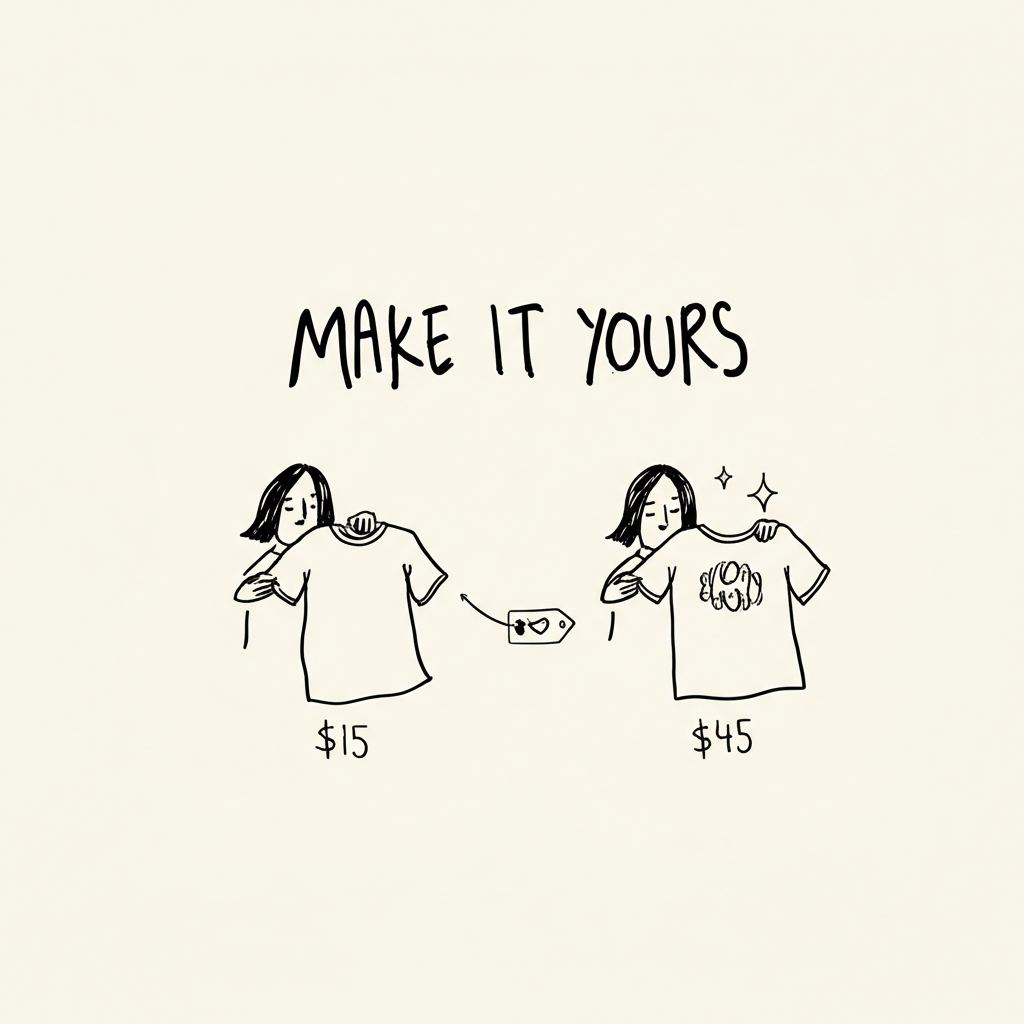
Customized products outperform generic ones because personalization creates emotional investment, eliminates price comparison, and reduces returns. Stores offering product customization report 50% higher margins, 6%+ conversion rates (vs 2.5% average), and up to 40% fewer returns—driven by customers who see exactly what they're buying before checkout. (Source: Harvard Business Review, 2022)
Product personalization used to be a nice-to-have. Not anymore. The personalized beauty market alone is projected to hit $55.98 billion in 2026, growing at a 15.3% CAGR. And that's just one vertical. (Source: The Business Research Company, 2026)
The data is clear. Barilliance found that personalized product recommendations increase average order value by 369% compared to generic recommendations. Over 81% of consumers say they'll pay more for personalized clothing and footwear. (Source: Barilliance, 2024)
(That 369% AOV number sounds absurd until you think about it. When someone's configuring a custom product, they get invested. They add the matching engraved keychain. They upgrade to the premium material. It adds up fast.) (Source: Barilliance, 2024)
McKinsey pegs personalization at scale at a 10-15% revenue lift. The average ecommerce conversion rate sits around 2.5-3%, but stores offering genuinely personalized experiences report 6% or higher. That's not incremental. That's doubling your business from the same traffic. (Source: McKinsey & Company, 2021)
The margin advantage
Generic products force you into price competition. Someone's always willing to go lower.
But when a customer configures a personalized product—choosing their font, their color, their engraving text—they can't comparison-shop that exact item anywhere else. That's how stores selling customized goods report profit margins up to 50% higher than those pushing identical commoditized products. You stop competing on price. You start competing on experience. (Source: Deloitte Consumer Review, 2024)
Product categories where customization makes the most sense
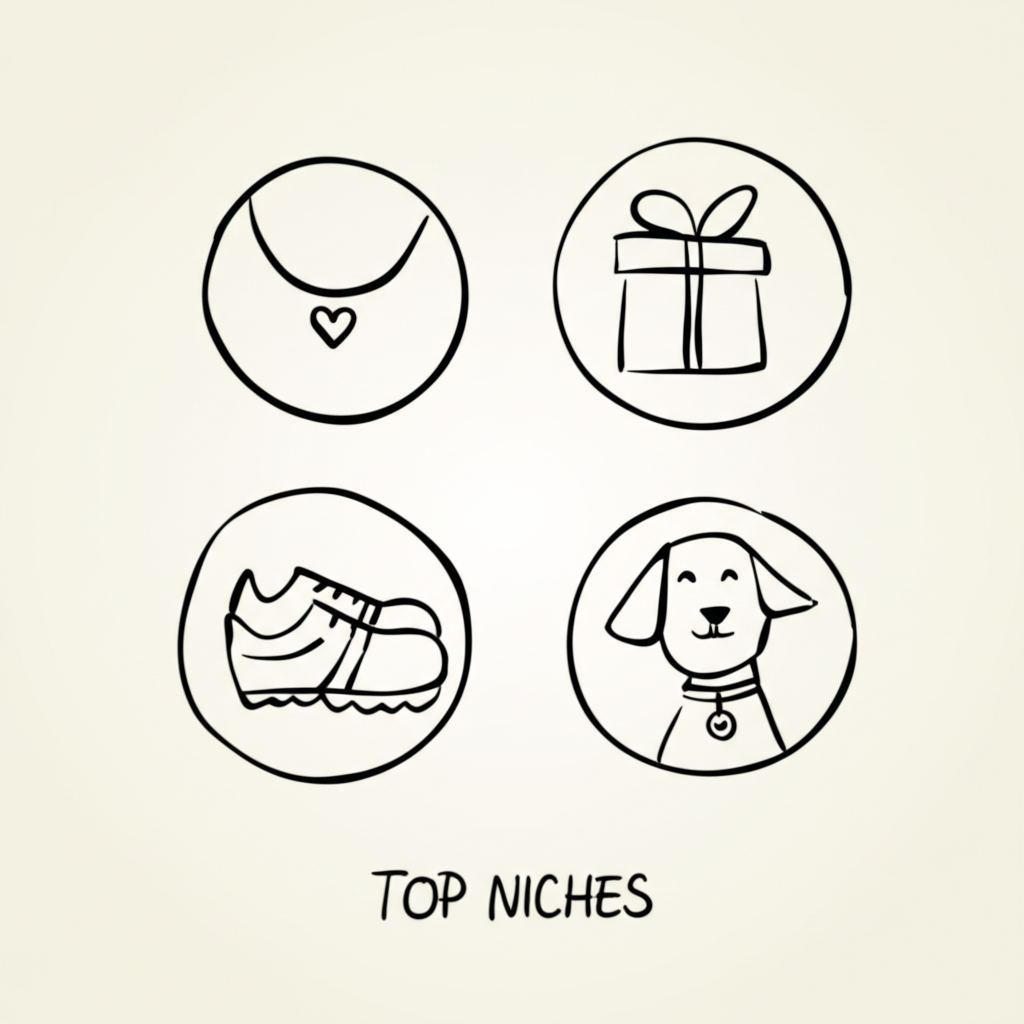
The product categories where customization delivers the highest ROI are jewelry and accessories, gifts and special occasions, athletic gear, and pet products. These categories share key traits: high emotional value, repeat purchase behavior, and customers who already expect to choose options like color, text, and material before buying.
Not every product benefits equally from personalization. Four categories print money with customization:
Jewelry and accessories
Obvious winner. Custom jewelry—birthstone rings, name necklaces, engraved bracelets—dominates personalized product sales. Customers already expect to customize jewelry; they're pre-sold on the concept.
Execution is everything, though. Your product page needs to let people play with options and see results in real time. Static mockups don't cut it anymore. If you're going this route, take a look at how building trust with transparent customization rules—like showing price changes live as customers add options—can make or break your conversion rate.
Gifts and special occasions
Weddings. Birthdays. Anniversaries. Graduations. Every life event creates demand for personalized products—monogrammed items for wedding parties, custom photo gifts for grandparents, engraved awards for corporate events.
Gift buyers think differently than people buying for themselves. They're less price-sensitive, more quality-conscious. They want the recipient to feel like it was made specifically for them—because it literally was. Creating personalized bundles that sell is especially effective here. A custom mug + engraved spoon + personalized card turns a $15 sale into a $45 one.
Athletic and performance gear
Custom athletic wear hits a sweet spot: functional product meets personal expression. Team jerseys with names and numbers. Custom yoga mats. Personalized gym bags.
The activewear trend isn't going anywhere. Shopify's trending products data shows leggings and athletic shorts still pulling significant search volume, with style variations (foldover, flare, compression) performing well.
Athletic gear buyers tend to come back. Someone who orders a custom team jersey this season will be back next season with updated rosters. That recurring revenue makes the initial setup effort worth it many times over.
Pet products
Pet owners treat their animals like family. Full stop.
That emotional connection fuels strong demand for personalized pet accessories—custom collars, engraved tags, personalized beds. This category has less competition than jewelry or apparel, which makes it easier for newer stores to get traction. And pet owners buy repeatedly: birthdays, holidays, and plenty of "just because."
What's actually trending right now
The biggest ecommerce trends in 2026 are AI-powered personalization, social commerce reaching $100 billion, and unexpected product spikes in niche categories like sports trading cards (+1,786%) and printable fabric (+1,608%). Merchants who combine trending products with customization options are capturing the highest margins. (Source: Google Trends / eBay Reports, 2025)
Three trends you can't ignore in 2026.
AI-powered personalization goes mainstream
Between 71% and 77% of consumers now expect personalized interactions from brands they buy from. 83% are more likely to purchase from brands that remember their browsing history. That gap between expectation and reality? That's the opportunity. (Source: McKinsey & Company / Attentive, 2021)
The hyper-personalization market is growing at 17.8% annually. When stores use data to tailor recommendations, product configurations, and default settings to individual shoppers, conversions follow.
For merchants, the practical upside is that these tools are getting way more accessible. What required custom development five years ago now ships as an app you can install in minutes.
Social commerce hits critical mass
Social commerce is projected to reach $100 billion by 2026. TikTok Shop, Instagram Shopping, Pinterest—these aren't experimental channels anymore. A growing share of product discovery happens there. (Source: eMarketer, 2025)
What does social commerce favor? Visually interesting, shareable products. Which is exactly what customized products are. A personalized necklace being configured in real time makes for better content than a generic product listing. Every single time.
Think about it this way: when someone shares a custom product they designed, they're doing your marketing for you. "Look what I made" beats "look what I bought" as a social post—and that kind of organic reach isn't something you can just buy with ad spend.
The unexpected trending products
Shopify's own data reveals some genuinely surprising spikes: sports trading cards up 1,786%, printable fabric up 1,608%, instant coffee up 1,339%. These are niche categories most merchants wouldn't have predicted.
The lesson isn't to chase every spike. It's that online buying patterns are less predictable than they used to be. The merchants who win are the ones flexible enough to test new categories quickly—especially when they can layer in personalization that competitors haven't thought of.
How to capitalize on these trends
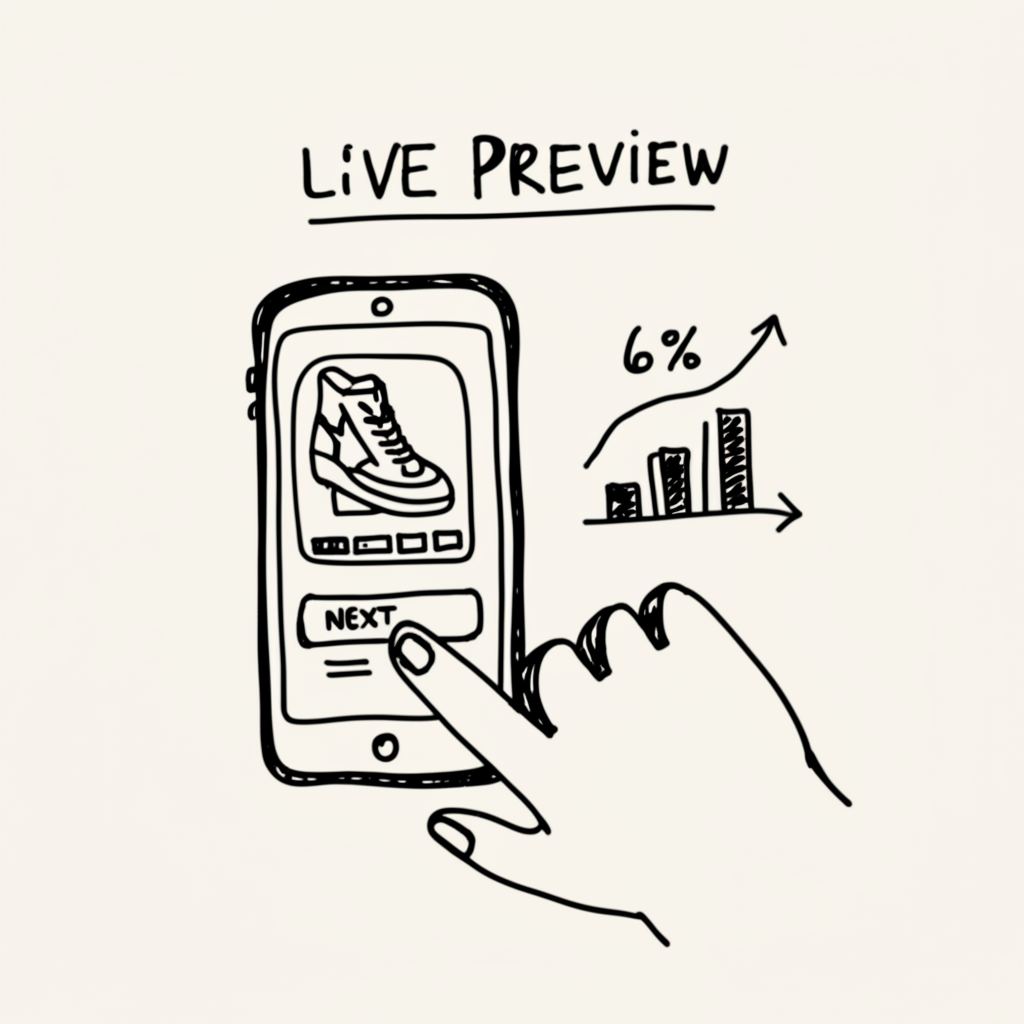
Implementation note: Start with one product that already sells, define the option set, price each add-on, prepare preview assets, and test the full product-page-to-checkout flow before expanding customization across the catalog.
If you're not selling customizable products yet, you're leaving margin on the table. The practical path:
Start with one product
Don't try to add customization across your entire catalog at once. Pick your best-seller—or, counterintuitively, the item with your highest return rate—and add personalization there. Text engraving. Color selection. Font choices.
Why the highest return rate? Returns on generic products often happen when what arrives doesn't match what the customer imagined. Customization forces them to define what they want upfront. They pick the color. They type the text. They approve the preview. By the time it shows up, it's exactly what they asked for.
See how customers respond. Then expand.
Invest in live preview
Static mockups worked in 2020. In 2026, customers expect to see their customizations rendered in real time. The conversion rate difference is substantial—remember that gap between 2.5% generic and 6%+ personalized. (Source: Multiple (eMarketer, Shopify, Statista), 2025)
Stores that show customers exactly what their personalized product will look like before checkout see fewer abandoned carts, fewer "this isn't what I expected" returns, and higher average order values. Tools like Podifai's product customizer let you add real-time preview to your Shopify store in minutes—no developer needed.
Avoid common pitfalls
Product customization mistakes can kill an otherwise solid product. Too many options overwhelms customers. Hidden pricing erodes trust. Unclear delivery timelines create anxiety.
Keep it simple. Show prices as they change. Set expectations clearly. And always—always—give customers a way to preview the final product before they commit. That single feature eliminates the majority of post-purchase complaints.
Frequently asked questions
What are the most purchased items online in 2026?
The most purchased items online in 2026 are fashion and apparel ($920.2B), food and groceries ($838.1B), home goods and decor, and electronics. Fashion leads globally in total revenue, while groceries are the fastest-growing US category at 25.8% year-over-year growth. Across all categories, personalized and customizable versions of these products consistently outperform generic alternatives.
What products have the highest profit margins online?
Customized and personalized products have the highest profit margins online. Stores selling personalized goods report margins up to 50% higher than those selling generic commoditized products. Jewelry with engravings, monogrammed accessories, and custom gift bundles are among the highest-margin items because customers cannot comparison-shop a one-of-a-kind product. (Source: Deloitte Consumer Review, 2015)
How does product customization affect ecommerce sales?
Product customization dramatically improves ecommerce sales metrics. Stores offering personalization report conversion rates of 6% or higher (vs the 2.5% industry average), average order value increases of up to 369%, and return rates that drop by up to 40%. Customers who configure their own product feel more invested and are less likely to return it. (Source: Harvard Business Review, 2022)
What are the trending products to sell in 2026?
Trending products to sell in 2026 include customizable fashion and jewelry, personalized home decor, AI-powered personalized recommendations, and social-commerce-friendly products. Shopify trend roundups also show how niche categories can spike quickly, so merchants should validate demand with current keyword, marketplace, and ad data before committing inventory.
Is personalization worth it for small Shopify stores?
Yes, personalization is especially worth it for small Shopify stores. Personalization eliminates direct price competition with larger retailers because each customized product is unique. Small stores report that adding even basic customization (text engraving, color selection, font choices) to a single product can double conversion rates and significantly increase average order value without requiring additional ad spend.
How do I add product customization to my Shopify store?
You can add product customization to your Shopify store by using apps like Podifai Product Customizer, which lets you offer real-time 3D preview of personalized products without any coding. Start with one product, add options like text, color, and font, enable live preview so customers see exactly what they are ordering, and expand based on customer response.
The bottom line
The most purchased items online in 2026 aren't fundamentally different from previous years. Apparel, accessories, home goods, electronics. The shift is in how they're sold.
Personalization has moved from differentiator to expectation. 77% of consumers expect it. Stores that deliver it capture higher margins, lower return rates, and stronger loyalty. With global ecommerce pushing toward $7 trillion, even a small share of personalized product sales represents serious revenue. (Source: McKinsey & Company / Attentive, 2021)
The trending products to sell in 2026 share a common thread: they reward merchants who give customers control over the final product. Custom necklace. Personalized pet collar. Configured team jersey. The stores winning right now stopped asking "what should I sell?" and started asking "how can I let my customers make it theirs?"
So what are you going to do with that? The question isn't whether to add customization. It's how fast you can get it live before your competitors do.
Ready to add live customization previews to your Shopify products? Try Podifai free — no credit card required →
Want to understand why customers pay more for personalized products? Read our guide on personalization psychology.
Ready to start your own custom product business? Follow our step-by-step guide to launch a custom product line on Shopify.
Want to see which Shopify stores are leading in specific custom product categories? Explore our in-depth store analyses: Custom Stickers, Custom Signs, Custom Wallets, Custom Wood Products, and Custom Plaques.
Considering custom jewelry? Calculate your potential returns with our jewelry ROI calculator.