What Is a Monogram? Types, Etiquette & How to Sell Them
What a monogram is, proper initial etiquette for couples and individuals, and how to sell monogrammed products on Shopify. Includes market data.
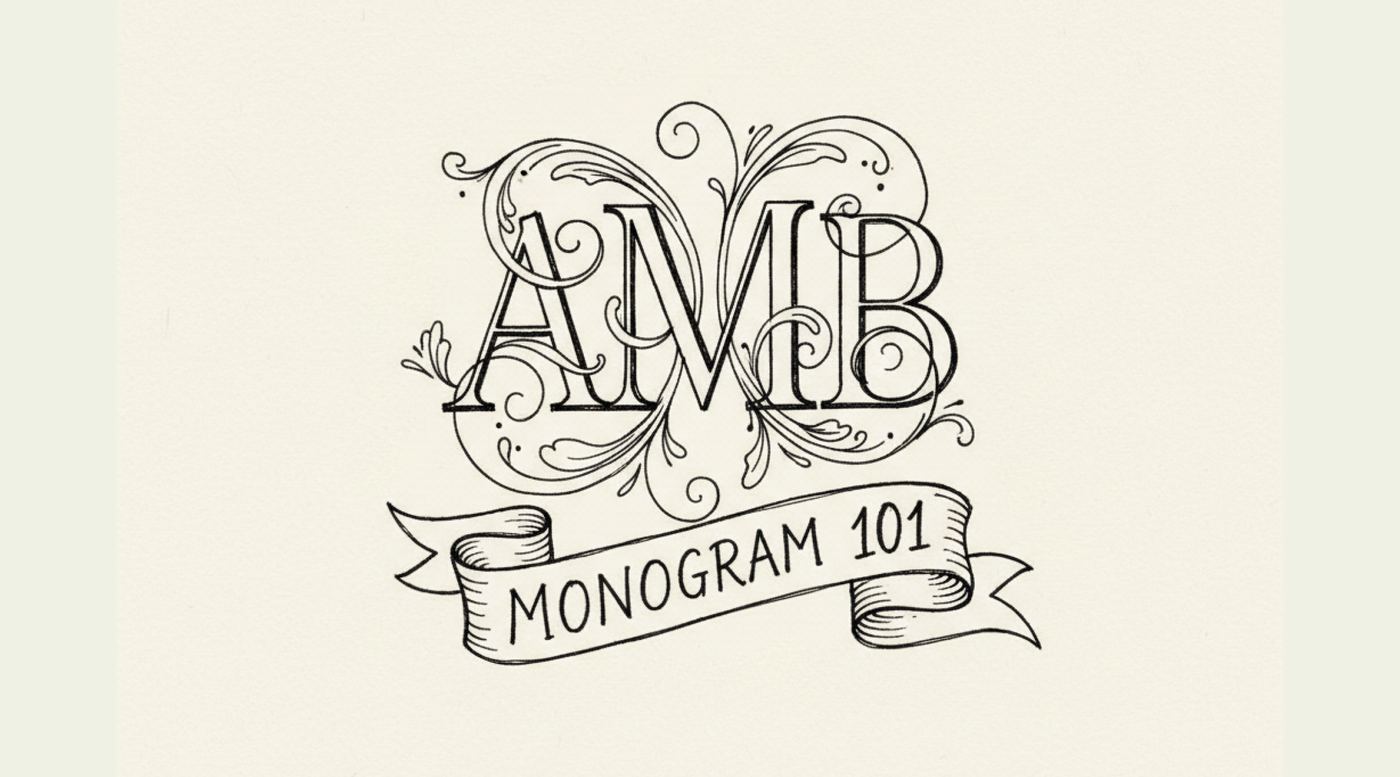
TL;DR: A monogram combines initials into a personalized design, typically with the last name initial larger and centered. Traditional order is first-LAST-middle, making monogrammed products perfect for premium pricing and gift market positioning on Shopify stores.
You've seen them on towels at luxury hotels, embroidered on shirt cuffs, and engraved on jewelry. Monograms are everywhere—yet when a customer asks you to add one to a product, things get complicated fast. Which initial goes first? Does it matter if they're married? And how do you actually set this up in your store without creating a nightmare of variants?
If you're a Shopify merchant selling personalized products—jewelry, gifts, apparel, or home goods—understanding monograms matters more than you might think. Get the etiquette wrong, and your customer ends up with a gift that reads backwards. Get it right, and you've just created something they'll keep forever.
This guide breaks down everything you need to know about monograms: what they are, the different types, proper etiquette rules, and most importantly, how to sell monogrammed products on your Shopify store without the headaches.
What is a monogram?
A monogram is a design made by combining two or more letters—typically initials—into a single symbol. The word comes from the Greek "monos" (single) and "gramma" (letter), though modern monograms usually feature multiple letters woven together.
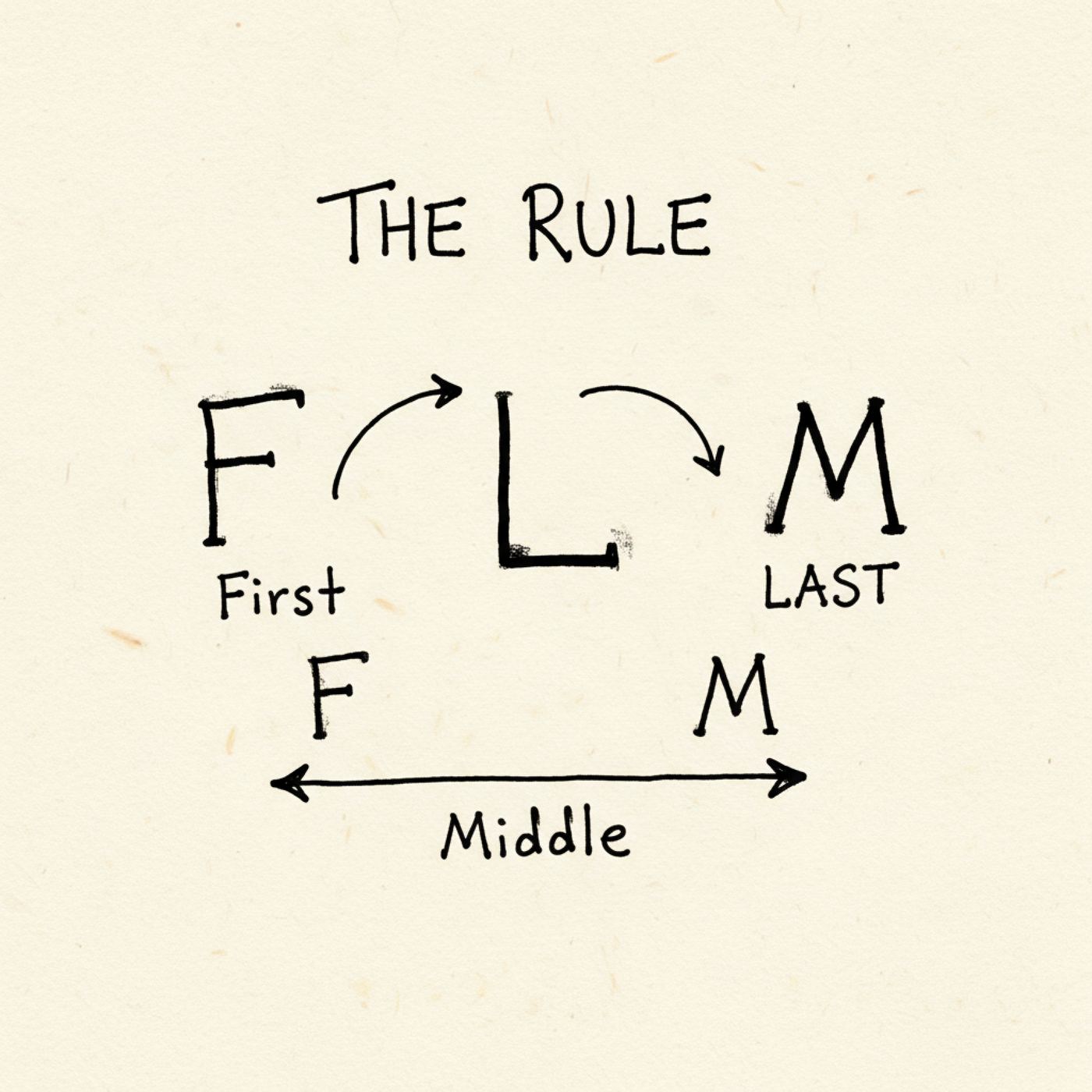
Unlike simple text personalization ("Sarah" embroidered on a bag), monograms follow specific formatting conventions. A traditional three-letter monogram places the last name initial in the center, larger than the others, with first and middle initials on either side.
For example: Someone named Freya Lucille Mitchell would have the monogram "FlM" or "fLm"—with the "L" larger and centered.
The global personalized gifts market reached $31.63 billion in 2023 and is projected to grow at 9.2% annually through 2030. Monogramming sits at the premium end of this market, commanding higher prices than basic text personalization. (Source: Market Research Future / Technavio, 2023)
What is monograms through history?
Monograms have been marking ownership and identity for over 2,000 years. Ancient Greek and Roman coins featured ruler monograms as early as 350 BC. The Chi-Rho symbol—combining the first two Greek letters of "Christ"—became widely recognized after Emperor Constantine adopted it in the 4th century.
During the Middle Ages, artists and craftsmen used monograms as signatures. Albrecht Dürer's famous "AD" mark helped authenticate his work and protect against forgeries. Royal families developed elaborate cyphers—Queen Victoria's interlocking "VR" (Victoria Regina) remains a classic example of Victorian monogram design.
The Victorian era (1837-1901) brought monograms to everyday households. Newly affordable embroidery made personalized linens accessible to the middle class, and monogrammed items became standard wedding gifts—a tradition that continues today.
Modern monograms have evolved beyond traditional formats. Contemporary designs might use block letters, single initials, or even stylized symbols. But traditional three-letter monograms remain the most popular choice for gifts and formal items.
What are the different types of monograms?
The four main types of monograms are traditional three-letter (first-LAST-middle), block (all same size, left to right), single initial (one letter, usually surname), and stacked (letters arranged vertically). Here are the styles you'll encounter—and likely need to offer in your store.
Traditional three-letter monogram
The classic format uses first, last, and middle initials—but not in that order. The last name initial sits in the center, slightly larger than the flanking letters. First initial goes on the left; middle initial on the right.
Format: First | LAST | Middle
Example: "John David Smith" becomes "jSd" or "JSd"
This style works best for formal gifts, wedding items, and traditional linens.
Block monogram
All letters appear in the same size, typically reading left to right in standard first-middle-last order (or just first-last for two-letter versions).
Format: First | Middle | Last (all same size)
Example: "John David Smith" becomes "JDS"
Block monograms feel more modern and are popular for men's items, corporate gifts, and casual personalization.
Single initial
Just one letter—usually the last name initial—often displayed in a decorative frame or with embellishment.
Single initials work well for shared items (household goods where multiple people share a surname) and minimalist designs.
Stacked monogram
Letters arranged vertically rather than horizontally. Order varies, but first name on top is common.
This style suits narrow spaces like pen clips, bag handles, or vertical design elements.
What order do letters go in a monogram?
In a traditional monogram, the letter order is first name initial, LAST name initial (larger, center), middle name initial. For example, John David Smith becomes "jSd" — not "JDS." This is where monograms get tricky—and where your product page can save customers from embarrassing mistakes.
Unmarried individuals
Straightforward: first, middle, last initials. In traditional format, arrange as first-LAST-middle with the surname initial larger and centered.
Married women (traditional approach)
This varies by preference, but traditional etiquette uses: maiden name initial, married surname initial (large, center), first name initial.
Example: Sarah Jane Miller marries John Thompson → "sTm" (maiden initial | married surname | first name)
Important: Not everyone follows this convention. Many women prefer to keep their full birth name order, drop their maiden name, or hyphenate. Always ask—don't assume.
Couples (shared items)
Joint monograms typically show both spouses' first initials flanking a shared surname initial.
Example: Sarah & John Thompson → "sTj" or "S & J Thompson"
For couples with different surnames, options include side-by-side initials, stacked monograms, or using an ampersand between individual monograms.
No middle name?
If someone doesn't have a middle name, a two-letter monogram works fine: first initial on the left, last initial (larger) on the right. Some people add a dot or design element where the third letter would be.
What products work best for monogramming?
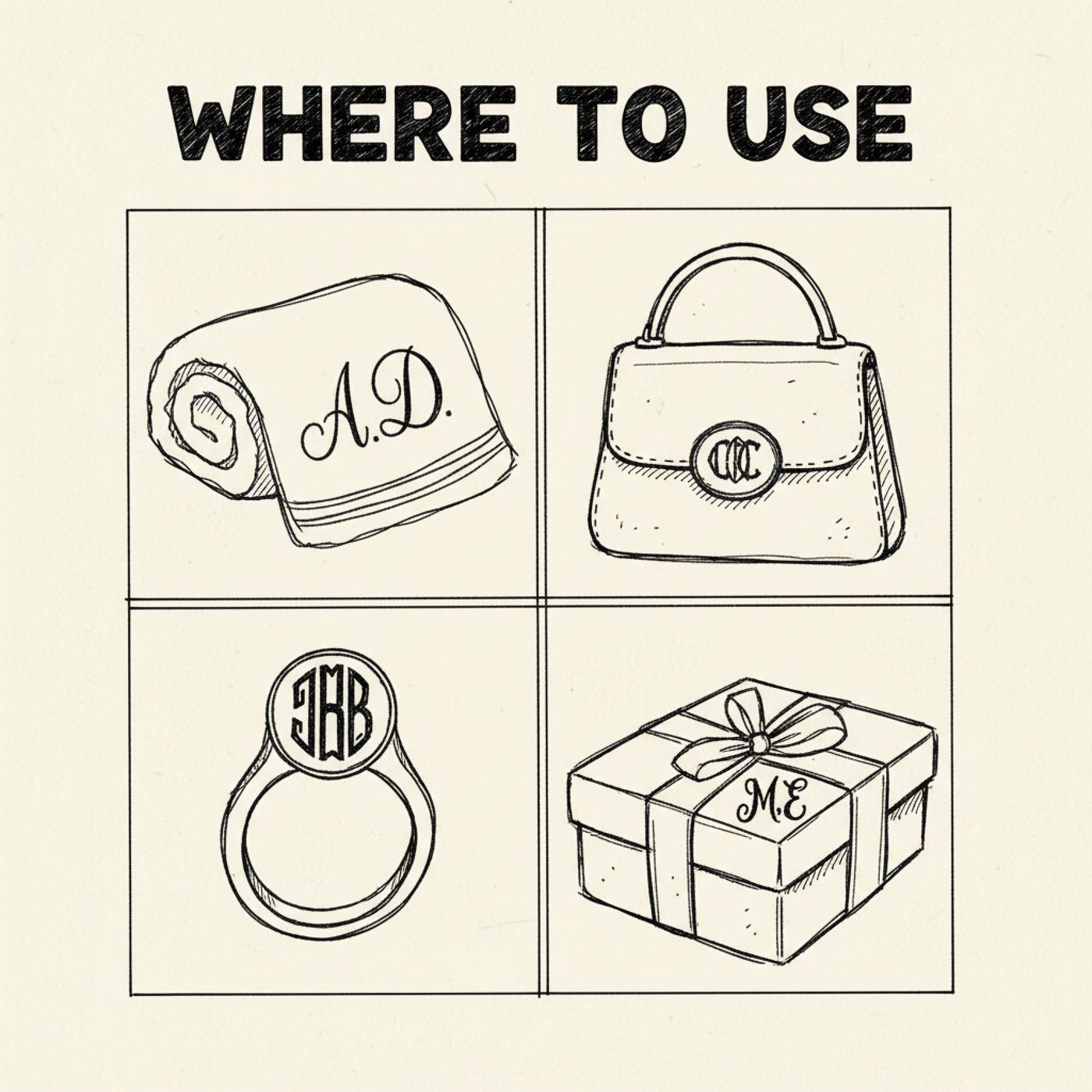
If you're considering adding monogrammed products to your Shopify store, these categories consistently perform well:
- Jewelry – Necklaces, bracelets, rings, cufflinks. High margins, strong gift appeal, and customers expect personalization.
- Leather goods – Wallets, bags, passport holders, luggage tags. Monograms add perceived value and justify premium pricing.
- Home linens – Towels, bedding, napkins, tablecloths. Wedding registries drive consistent demand.
- Apparel – Robes, dress shirts, polo shirts, baby clothing. Gift-ready and personal.
- Stationery – Notecards, journals, correspondence sets. Classic monogram territory with loyal repeat customers.
- Barware – Glasses, decanters, ice buckets. Popular for wedding parties and corporate gifts.
The key across all categories: monogramming lets you charge more for the same base product. A plain cotton robe might sell for $40; monogrammed, it's $65—and customers perceive it as higher value.
How to sell monogrammed products on Shopify?
Here's the practical part: actually setting this up in your store.
The variant problem
Shopify's native variant system caps at 100 variants per product. A three-letter monogram using just the 26 letters of the alphabet would need 17,576 combinations—before you account for size, color, or font options.
This is why trying to create a variant for every possible monogram doesn't work. You need a different approach.
Using a product customizer app
A Shopify product customizer app lets customers enter their initials directly on the product page, see a live preview of how it will look, and add the customized item to their cart—all without you creating thousands of variants.
Look for these features when choosing a customizer for monogrammed products:
- Text input fields with character limits (for controlling initial count)
- Live preview that shows the actual monogram on the product
- Font selection (script, block, serif, etc.)
- Add-on pricing for monogramming
- Clear order details that flow through to fulfillment
The live preview matters more than you might think. When customers can see exactly what they're ordering, they buy with more confidence—and you get fewer "that's not what I expected" returns.
Help customers get it right
Don't assume customers know monogram rules. Your product page should help them get it right:
- Add a brief explainer on what order to enter initials
- Include examples ("For Sarah Jane Miller, enter: S M L")
- Offer a "not sure?" tooltip or help link
- Consider a checkbox: "This is a gift – I'd like to enter the recipient's initials"
A little education upfront saves everyone time later. Plus, customers appreciate when you make things easy to understand.
Pricing monogrammed products
Most stores charge $10-30 extra for monogramming, depending on the base product price and complexity. Some approaches:
- Flat fee – "Add monogramming for $15"
- Per-character – "$5 per initial" (works for variable-length personalization)
- Included in premium pricing – Build it into your base price and market as "complimentary monogramming"
The "complimentary" approach works particularly well for luxury positioning—it feels like added value rather than an upcharge.
How does the next steps work?
Monograms have stuck around for over two thousand years for a reason: people love putting their mark on things. For Shopify merchants, that translates to higher average order values, stronger gift market positioning, and products that customers genuinely treasure.
The key takeaways:
- A monogram combines initials into a single design—usually with the last name initial larger and centered
- Etiquette varies by marital status and personal preference—help your customers get it right
- A product customizer app handles the complexity that variants can't
- Live preview reduces returns and increases purchase confidence
Ready to add monogramming to your store? Start with one or two products, nail the customer experience, then expand from there. Your future customers—and their gift recipients—will thank you.
📚 Related Articles
- Building a Custom Jewelry Shopify Store with Podifai
- 100+ Trendy Names for Your Jewelry Business
- 7 Ways Personalization Can Increase Your Shopify Store's Average Order Value
- Why Real-Time Product Preview Boosts Customer Confidence
- How to Set Up an Embroidery Customization Store on Shopify
- Free Shopify Theme Detector — check what theme top monogram stores are using
Frequently Asked Questions
How do I get started?
Begin by assessing your current setup and identifying key improvement areas. Start with basic implementations and gradually add advanced features as you gain experience and confidence with the platform.
What are the main benefits?
Key advantages include improved user experience, higher conversion rates, increased customer satisfaction, and competitive differentiation. Most businesses see measurable results within the first month of proper implementation.