Most Purchased Items Online in 2026: What's Selling & Why
Jan 20, 2026
Shopify
Every Shopify merchant asks the same question at some point: what should I be selling? The answer shifts faster than you'd expect. What dominated online carts three years ago isn't necessarily winning today.
Here's the reality: global ecommerce sales hit $6.86 trillion in 2025, and nearly 2.8 billion people made at least one online purchase last year. That's a massive pie. But the merchants capturing the biggest slices aren't just selling popular products—they're selling products their way.
This guide breaks down what people are actually buying online right now, where the margins are, and how customization is quietly reshaping the entire game.
The product categories dominating online sales
Fashion, jewelry, and apparel
No surprise here. Clothing, shoes, and accessories consistently rank at the top of every ecommerce list. Fashion ecommerce sales reached $920.2 billion in 2025, up 12.1% from the previous year.
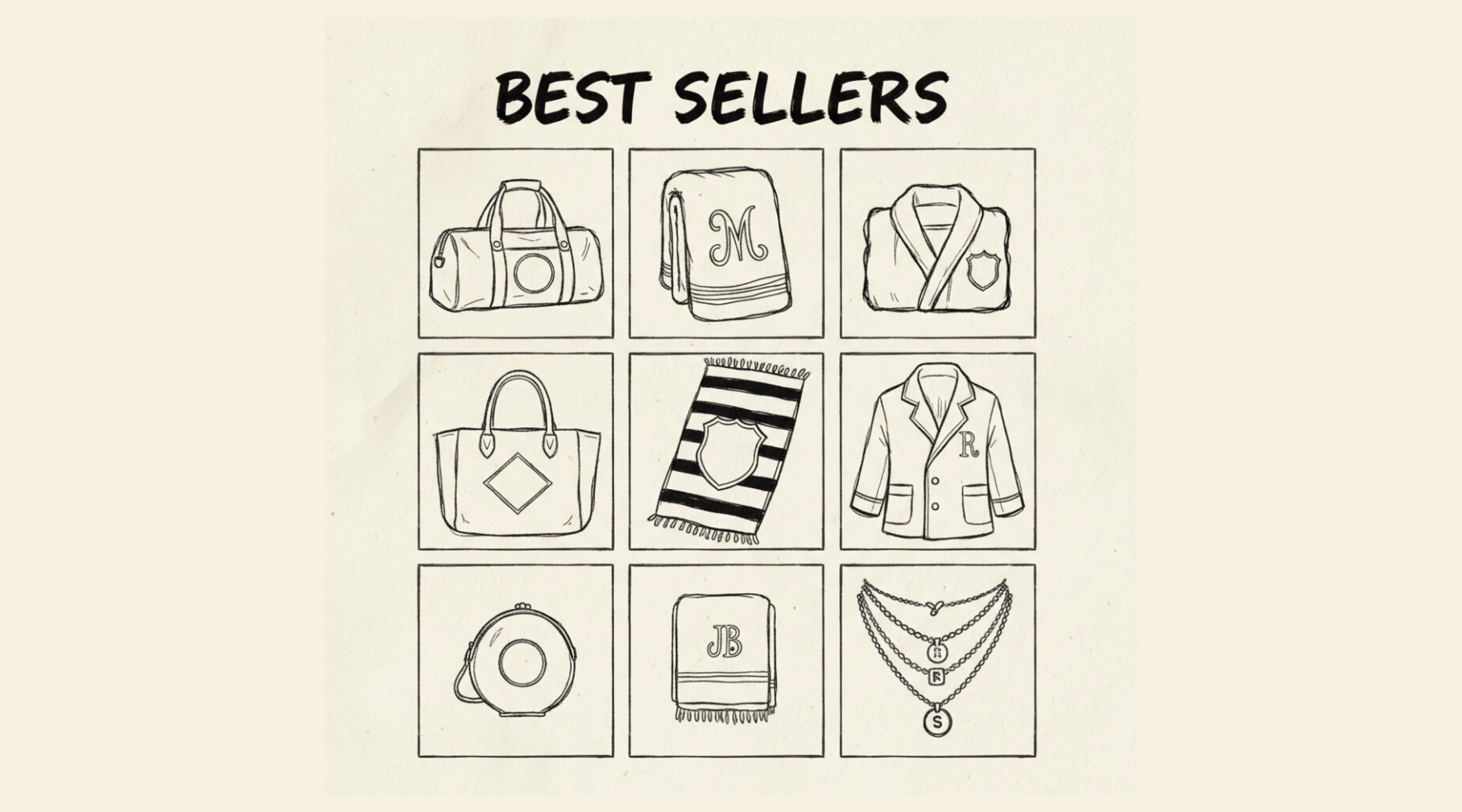
But here's what matters for Shopify store owners: the fashion category is brutally competitive. You're not going to out-Amazon Amazon. The merchants winning in apparel are the ones offering something Amazon can't: customization. Monogrammed bags. Custom-fit athletic wear. Personalized jewelry with engravings.
When 76% of consumers prefer buying from brands that personalize experiences, the message is clear. Generic products are a race to the bottom. Personalized products are a race to the top.
Home goods and décor
The pandemic permanently shifted how people think about their living spaces. Home furnishing remains a top category for online shopping, with customizable wall art, throw pillows, and personalized blankets driving significant sales.
What's notable: these aren't impulse buys. Customers spend time configuring exactly what they want. They visualize it in their space. And when they finally click "add to cart," they've already committed emotionally.
That emotional investment translates directly to lower return rates and higher customer satisfaction.
Electronics and gaming accessories
Consumer electronics hold steady at 15-18% of online sales, but the real growth is in customizable add-ons. Custom keycaps for mechanical keyboards have maintained consistently high search volume since 2022. Gaming gear with personalized elements—custom controller skins, RGB lighting configurations—commands premium pricing.
The pattern repeats: commoditized electronics struggle on margins. Customizable accessories print money.
Food, groceries, and household essentials
Here's the fastest-growing category most Shopify merchants overlook. Food and household essentials grew 25.8% and 22.6% year-over-year respectively in 2025. Online food purchases hit $838.1 billion.
Most individual store owners can't compete in groceries. But the subcategory of personalized food gifts—custom cookie boxes, monogrammed cutting boards, engraved wine accessories—sits at the intersection of gift-giving and personalization where margins are genuinely excellent.
Why customized products are outperforming everything else
A few years ago, product personalization was a nice-to-have. Now it's the primary way many successful stores stand out.
The data backs this up. Personalized product recommendations increase average order value by 369% compared to generic recommendations. Over 81% of consumers say they're willing to pay more for personalized clothing and footwear.
We've seen this firsthand. Merchants who add live preview capabilities to their customizable products—letting customers see exactly what their engraved bracelet or custom phone case will look like before purchasing—report dramatically lower return rates. When customers can visualize the final product, they buy with confidence.
(Honestly? Most returns on personalized products happen because customers couldn't picture the end result. Fix that visualization problem and you fix most of your returns.)
The margin advantage
Generic products force you into price competition. Someone's always willing to go lower. But when a customer configures a personalized product—choosing their font, their color, their engraving text—they can't comparison-shop that exact item anywhere else.
Product categories where customization makes the most sense
Not every product benefits equally from personalization. Here's where customization delivers the biggest impact:
Jewelry and accessories
This is the obvious winner. Custom jewelry—whether it's birthstone rings, name necklaces, or engraved bracelets—dominates personalized product sales. Customers expect to customize jewelry. They're pre-sold on the concept.
The key is execution. Your product page needs to let customers play with options and see results in real time. Static mockups don't cut it anymore. Launching a custom product line requires more than just adding variant options—it requires showing customers what they're creating.
Gifts and special occasions
Weddings, birthdays, anniversaries, graduations. Every life event creates demand for personalized products. Monogrammed items for wedding parties. Custom photo gifts for grandparents. Engraved awards for corporate events.
Gift buyers have different psychology than self-purchasers. They're less price-sensitive and more quality-conscious. They want the recipient to feel like the gift was made specifically for them—because it literally was.
Athletic and performance gear
Custom athletic wear sits at a sweet spot: functional product plus personal expression. Team jerseys with names and numbers. Custom yoga mats. Personalized gym bags.
The activewear trend isn't slowing down. Shopify's trending products data shows leggings and athletic shorts still driving significant search volume, with specific style variations (foldover, flare, compression) performing well.
Pet products
Pet owners treat their animals like family members. That emotional connection creates strong demand for personalized pet accessories: custom collars, engraved tags, personalized beds.
This category has lower competition than jewelry or apparel, making it easier for new stores to establish themselves. And pet owners buy repeatedly—customized products for birthdays, holidays, and "just because."
What's actually trending right now
Beyond the evergreen categories, here's what's moving in 2026:
AI-powered personalization
Over 95% of customer interactions will use AI according to current projections. That includes visual mockup generation, smart product recommendations, and predictive customization suggestions.
For merchants, this means the tools for creating personalized experiences are getting dramatically more accessible. What required custom development five years ago now comes packaged in apps you can install in minutes.
AR and virtual try-ons
Augmented reality shopping experiences are crossing from novelty into necessity. Customers want to see how that custom piece of wall art looks in their living room before buying. They want to visualize that personalized phone case in their hand.
The friction reduction is significant. AR try-ons reduce returns by helping customers make confident decisions upfront.
Multichannel personalization
Selling on Shopify alone isn't enough anymore. Merchants are expanding to Etsy, TikTok Shop, and other platforms—and customers expect the same personalization experience everywhere.
The stores getting this right are building personalized bundles that work across channels, creating consistent experiences whether a customer finds them through Instagram or organic search.
How to capitalize on these trends
If you're not already selling customizable products, you're leaving margin on the table. Here's the practical path forward:
Start with one product
Don't try to add customization to your entire catalog at once. Pick your best-selling item—or the one with the highest return rate—and add personalization options there. Text engraving. Color selection. Font choices.
See how customers respond before expanding.
Invest in live preview
Static mockups worked in 2020. In 2026, customers expect to see their customizations rendered in real time. The difference in conversion rates is substantial.
We've tested this repeatedly. Stores that show customers exactly what their personalized product will look like before checkout see fewer abandoned carts, fewer "this isn't what I expected" returns, and higher average order values.
Avoid common pitfalls
Product customization mistakes can kill an otherwise solid product. Too many options overwhelms customers. Hidden pricing erodes trust. Unclear delivery timelines create anxiety.
Keep it simple. Show prices as they change. Set expectations clearly.
The bottom line
The most purchased items online in 2026 aren't fundamentally different from previous years: apparel, accessories, home goods, electronics. The shift is in how these products are sold.
Personalization has moved from differentiator to expectation. Customers now assume they'll be able to customize products to their preferences. Stores that deliver on that expectation capture higher margins, lower return rates, and stronger customer loyalty.
The question isn't whether to add customization. It's how quickly you can implement it before your competitors do.