Best AI Store Builders for Shopify (2026)
A practical look at Shopify's AI store builder and Sidekick versus Atlas, Build Your Store and Storebuild.ai, with pricing checked November 8, 2026.

By Chelsea Tang, Founder of Podifai · LinkedIn
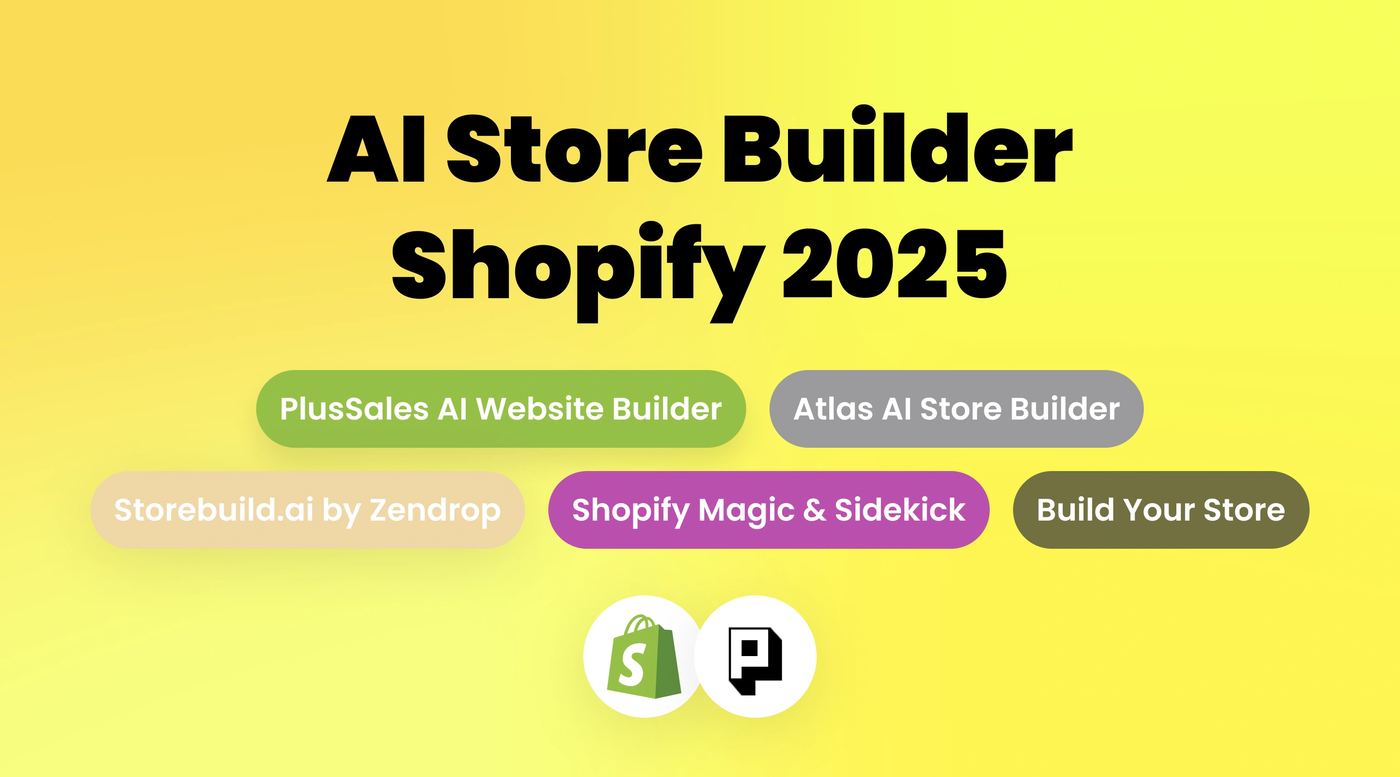
TL;DR: Start with Shopify's AI store builder and Sidekick, which are built into Shopify. Third-party builders like Atlas, Build Your Store and Storebuild.ai can help, mostly for dropshipping-style stores, but check costs, supplier terms and content rights first. AI speeds up the first draft; you still own the products, copy, policies and testing.
Best AI Store Builders for Shopify (2026)
Shopify's AI store builder and Sidekick
- Cost: Shopify's pricing page shows 3 days free, then $1 per month for 3 months, then your plan price (Basic is $39 per month, or $29 billed yearly). I did not find a separate fee for the AI builder or Sidekick on Shopify's pages.
- Sidekick: Shopify's AI assistant in the admin. Shopify's own AI page lists help with store design, product photo editing, product descriptions and setup questions.
- Cost: Shopify's offer on that page is a free start, then $1 per month for 3 months, then your plan price. I did not find a separate fee for the AI builder or Sidekick on Shopify's pages; confirm on shopify.com/pricing.

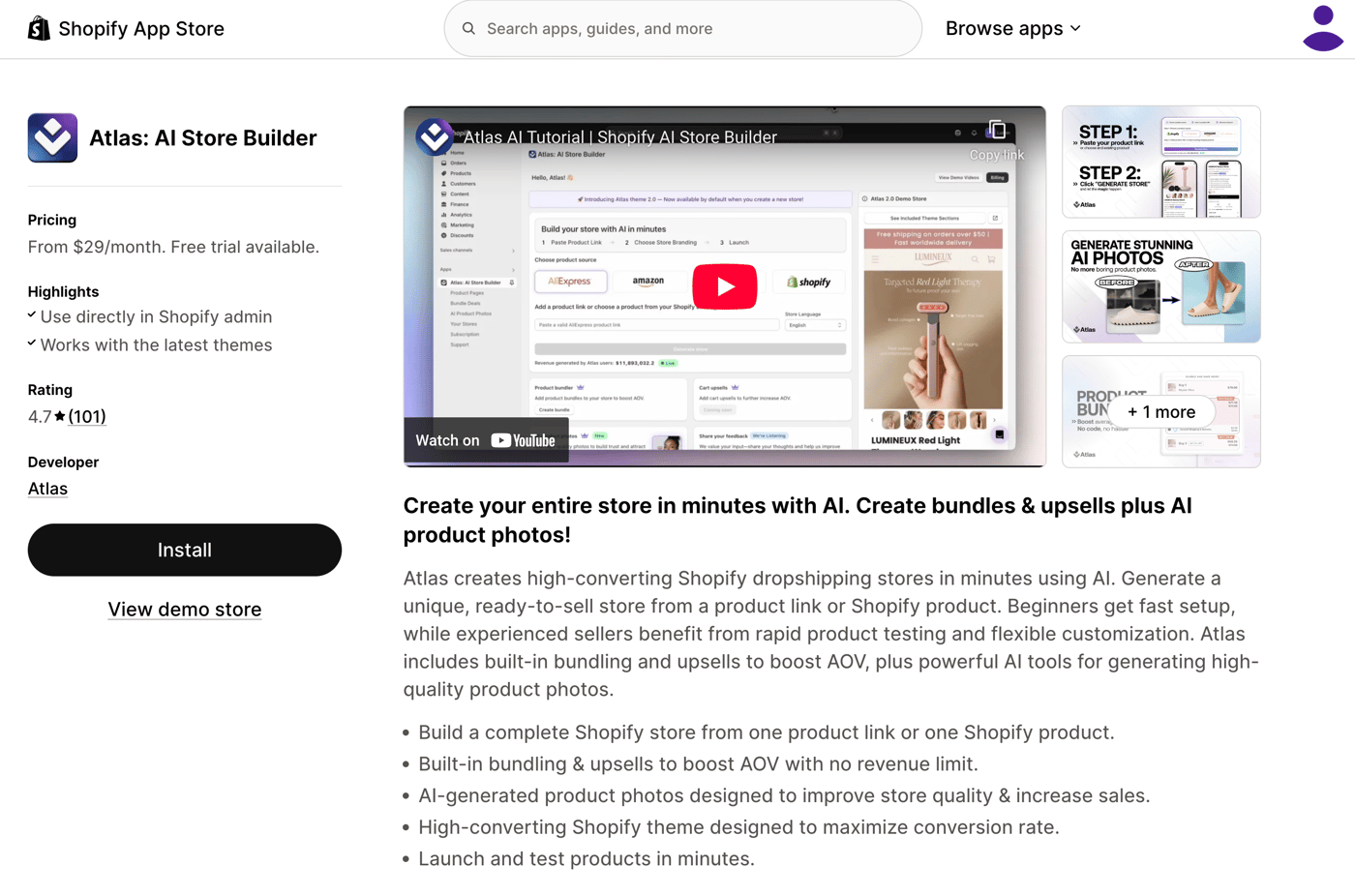
Atlas: AI Store Builder
- Pricing: the listing shows an All-in-One plan at $39 per month with a 7-day free trial, plus a note that additional charges apply as your store generates revenue. It is free to install on development stores.
- Rating: 4.5 stars from 386 reviews on the Shopify App Store, with the Built for Shopify badge.
- What it does: builds stores and pages from a product link, including landing pages, advertorials and listicles, with bundle and cart upsells.
- Watch for: the listing says Atlas must not be used to copy products, images or content from other sites without the rights holder's permission.
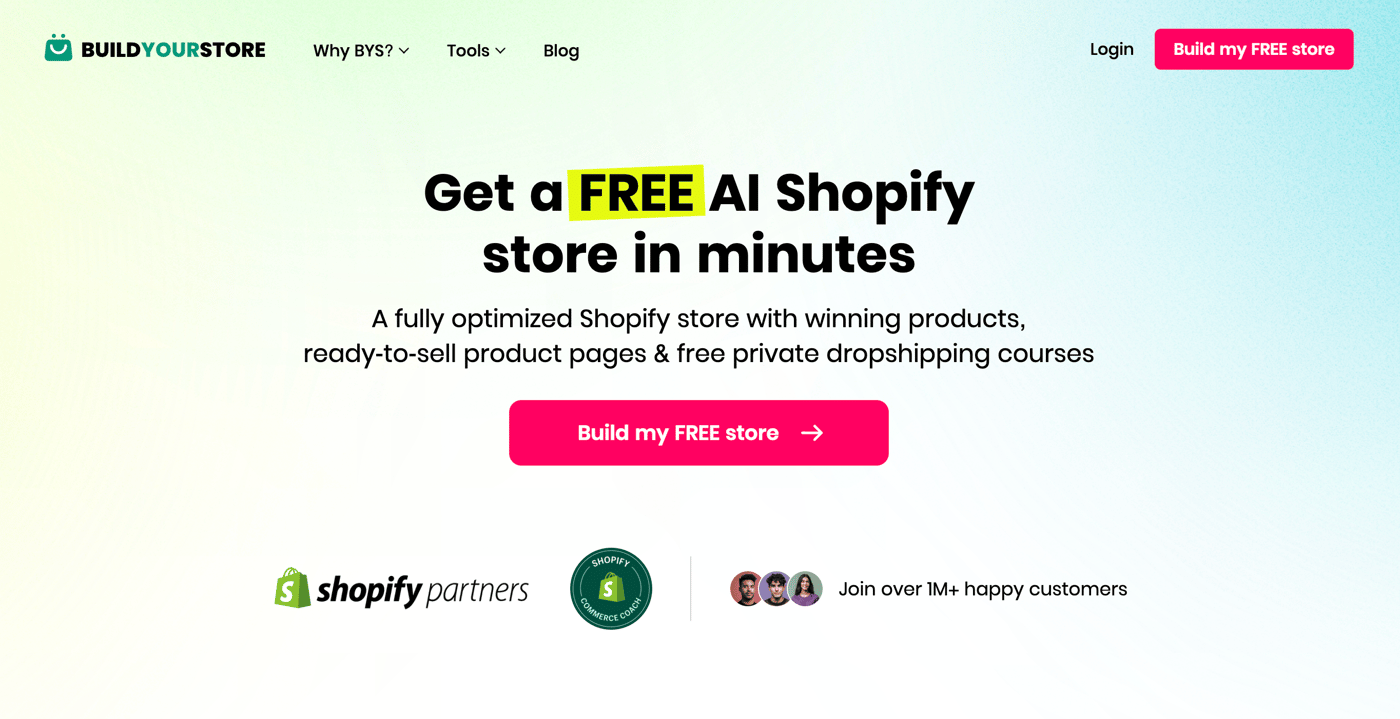
Build Your Store
- Pricing: the site says building a store is free, with no credit card required.
- How it works: you pick a niche, the tool builds a store with products loaded, and you receive login details for it.
- Watch for: its focus is dropshipping with pre-selected "winning products". Many stores can end up selling the same items, so check supplier shipping times, margins and what makes your store different.
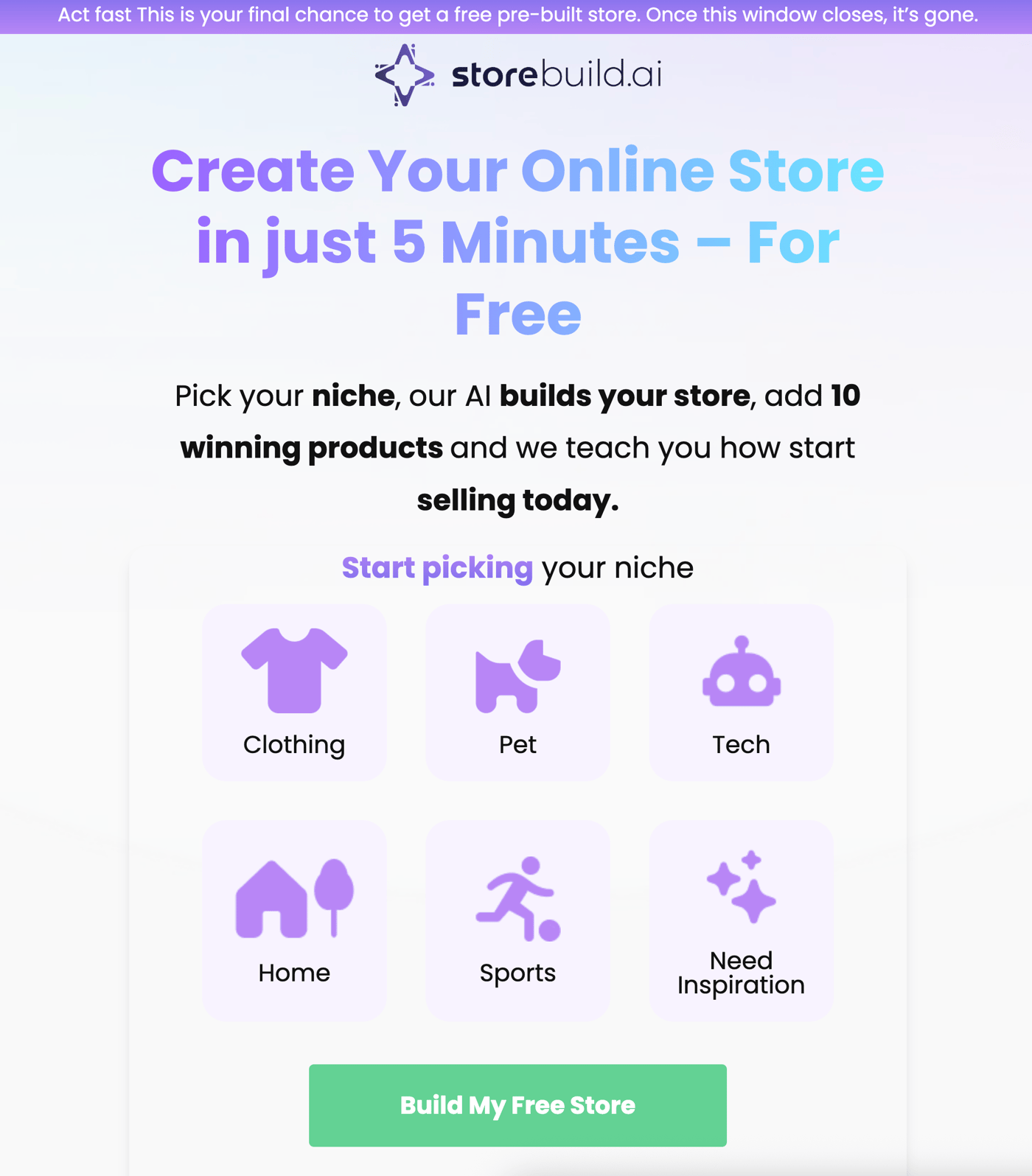
Storebuild.ai
- Pricing: the site says you can create a store for free.
- How it works: you choose a niche and the tool adds 10 supplier products to your store.
- Watch for: the product range comes from the tool's own supplier setup, so review product quality, delivery times and pricing before you publish.
I removed PlusSales AI Website Builder from this list. Its Shopify App Store page now says the app is not currently available.
AI Product Photography
Using AI for product photos
My notes from testing these tools on jewelry photos
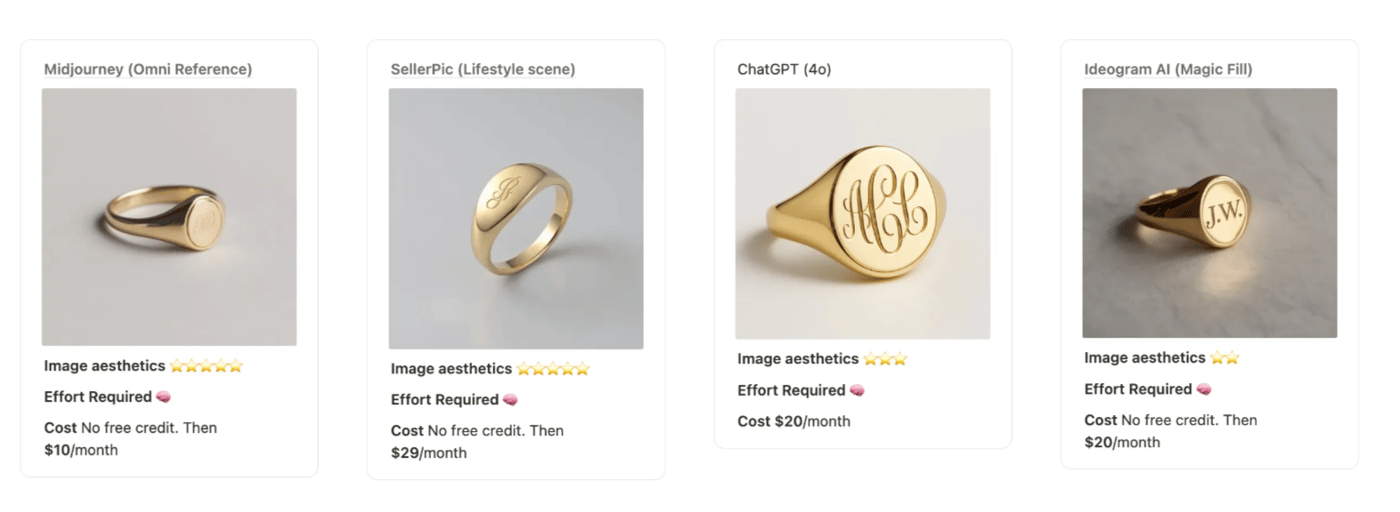
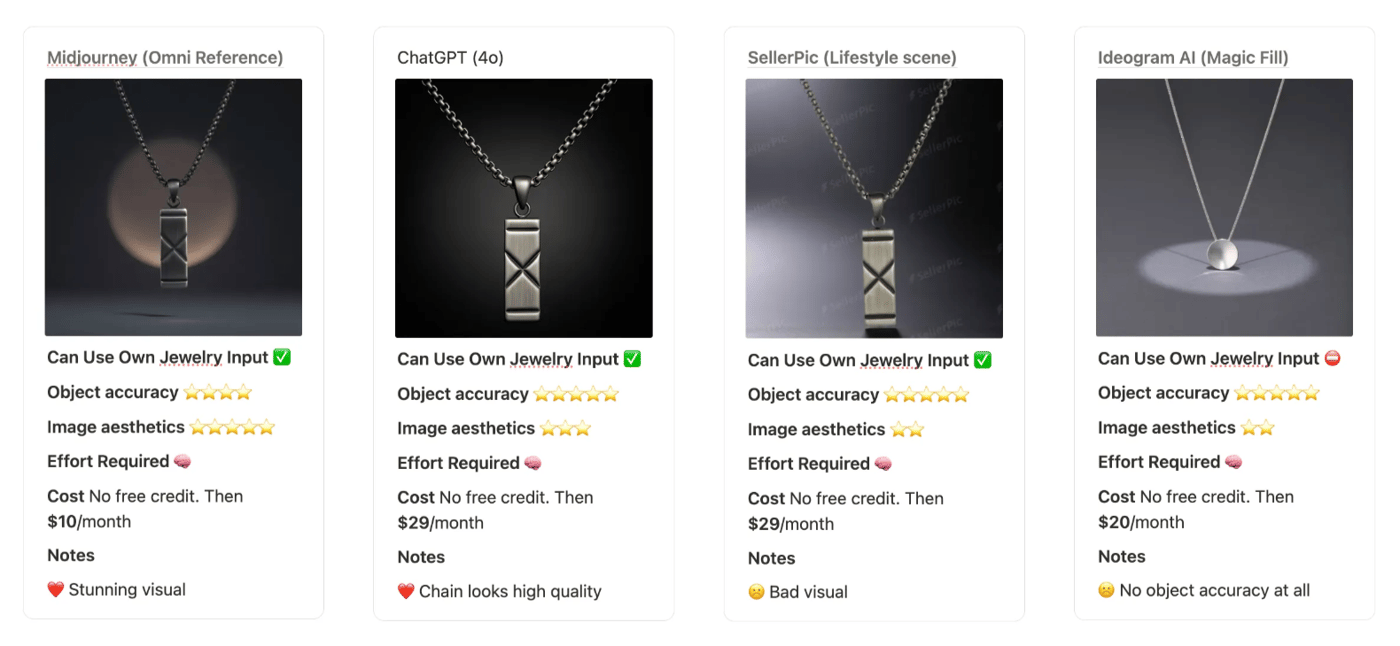
I compared several AI image tools on jewelry product shots. These are my impressions, not a controlled benchmark, and results will differ by product and prompt.
What stood out:
SellerPic with Ideogram gave the most realistic product-on-model images. Midjourney with Omni Reference produced the strongest lifestyle scenes. ChatGPT kept the original product proportions most reliably. Always compare the output against the real product, because AI images can change small details such as clasps, stones and engraving.
Common Challenges and Solutions in the AI Space
Challenge 1: Sameness and competition
Problem: AI-built stores often share templates and default copy, and builders that preload the same supplier products leave many stores selling the same items.
Solution: Choose products and a position you can explain, write your own brand story, and use your own photos where you can.
Challenge 2: Content quality
Problem: AI-generated copy can contain factual errors, unsupported claims and an inconsistent tone.
Solution: Read every product description and policy before publishing, check any claim about materials, shipping or returns, and keep a human owner for the final text.
Challenge 3: App access and theme changes
Problem: Third-party builders and page-builder apps ask for access to store data and can add code or pages to your theme.
Solution: Review the permissions before you install, try the app on a duplicate theme first, and test what happens when you uninstall it.
Challenge 4: Data and privacy
Problem: AI tools may process your product, order or customer data under their own terms.
Solution: Share only what the task needs, read each tool's privacy policy, and prefer Shopify's built-in tools when customer data is involved.
Challenge 5: Content rights
Problem: Tools that generate stores from product links can reproduce text or images from other sites.
Solution: Use images and text you own or have licensed, and follow each tool's own terms on copying content.
A Realistic First Week
AI shortens the first draft. It does not shorten the work of choosing products, setting policies and testing orders. A sensible order of work:
- Day 1: Decide what you will sell and who it is for. Generate a first draft with Shopify's AI store builder.
- Day 2: Replace placeholder products and copy with your own. Add real photos, or AI-assisted photos you have checked against the real product.
- Day 3: Set shipping, taxes, payments and your return and privacy policies. Read them yourself.
- Day 4: Place test orders on mobile and desktop, including checkout and order emails.
- Day 5 to 7: Fix what the tests showed, then launch quietly and watch the first real orders closely.
Looking for more AI tools to build your store? Try our product description generator to create compelling copy instantly.
Need a brand name? Use our store name generator to find the perfect name for your business.
Planning to offer product customization? Learn more in our product configurator guide.
Frequently Asked Questions
What is the best AI store builder for beginners?
Start with Shopify's own AI store builder and Sidekick. They work inside the standard Shopify admin, so you edit the result in the normal theme editor and are not tied to a separate tool. As of November 8, 2026, Shopify's pricing page shows 3 days free, then $1 per month for 3 months.
How much does it cost to build an AI-powered Shopify store?
Shopify's AI features are part of the Shopify admin, so you pay your Shopify plan after the trial offer (see shopify.com/pricing). Atlas lists $39 per month with a 7-day trial and extra charges as your store generates revenue. Build Your Store and Storebuild.ai say building the store is free; product, supplier, app and payment costs are separate.
Can AI store builders create unique designs or do they all look similar?
Not by default. Builders reuse templates and default copy, so the result often looks like other stores. Add your own brand story, photography and product choices to stand apart.
What are the biggest challenges when using AI store builders?
The main ones are copy accuracy, sameness, app permissions and theme changes, privacy, and content rights. The challenges section above covers each with a fix.
How long does it take to build a profitable AI store?
A draft store can appear in minutes, but a launch-ready store takes longer. Products, photos, policies, shipping, payments and test orders are still your work, and they usually take much longer than the draft itself.